
What's Happening?
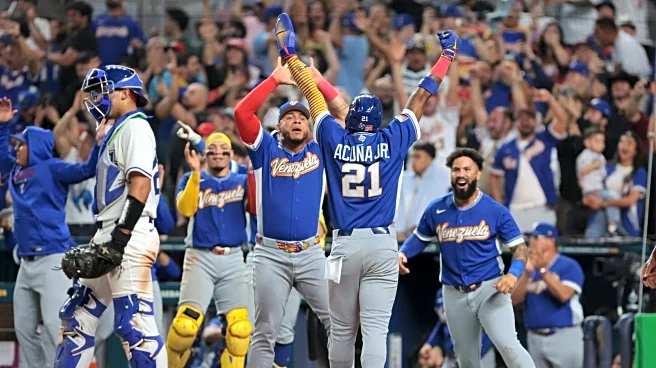
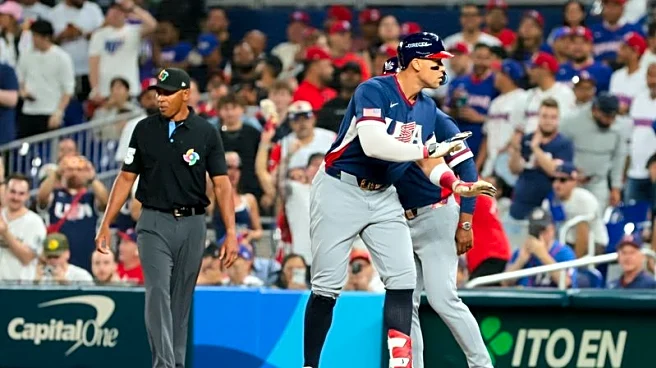
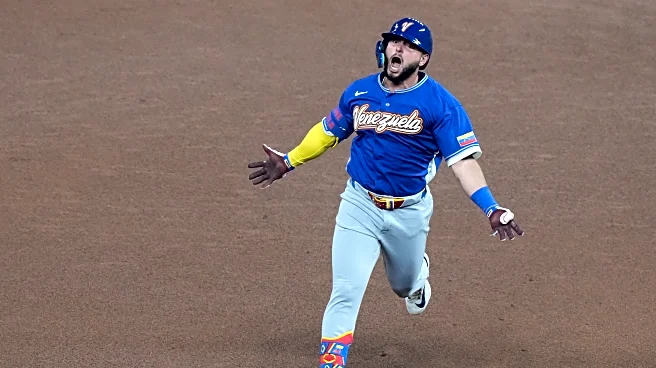
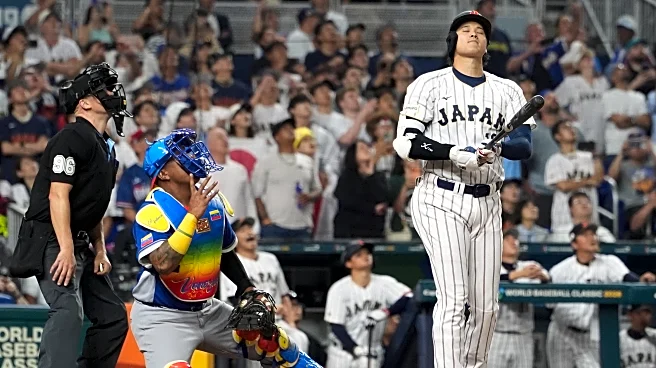
Venezuela emerged victorious in the World Baseball Classic, defeating the United States 3-2 in a thrilling final. Eugenio Suárez's ninth-inning double was the game-winning hit, bringing home pinch-runner Javier Sanoja. Venezuela had initially taken a 2-0
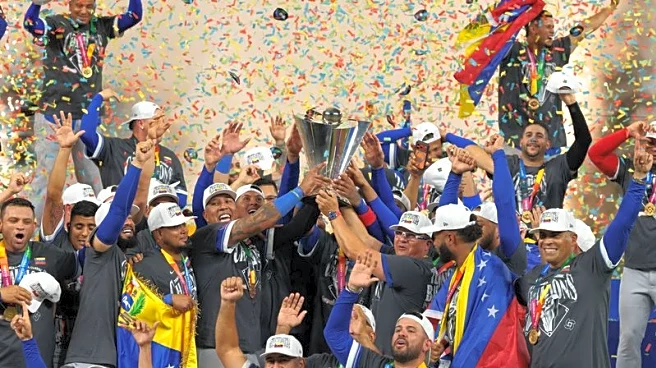
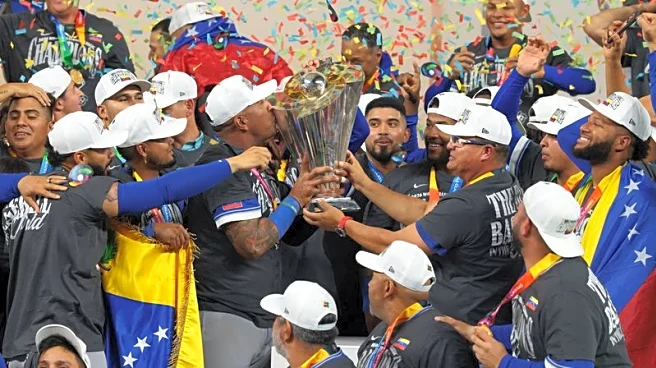
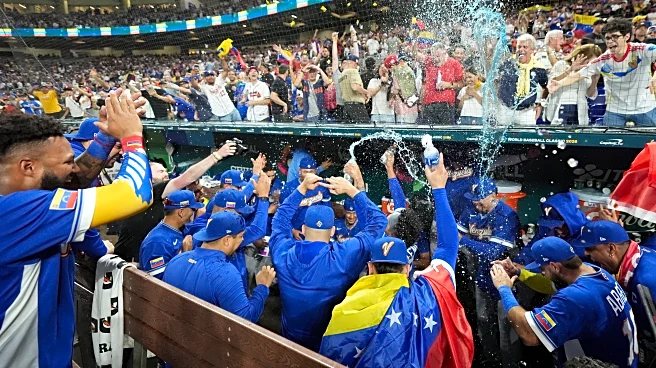
lead with contributions from Maikel Garcia and Wilyer Abreu. The U.S. tied the game in the eighth inning with Bryce Harper's two-run homer. Despite the U.S. team's strong lineup, Venezuela's pitching, led by Eduardo Rodríguez, held the Americans to minimal hits. The victory was celebrated by Venezuelan players and fans, marking a historic achievement for the nation.
Why It's Important?
Venezuela's victory is a landmark moment in international baseball, showcasing the country's talent and potential in the sport. It also highlights the geopolitical context, as the game was played amid political tensions between the U.S. and Venezuela. For Venezuela, this win provides a sense of national pride and unity, offering a positive narrative amid ongoing challenges. The U.S. team's loss, despite its star-studded roster, underscores the competitive nature of international sports and the unpredictability of outcomes.
What's Next?
Venezuela's win may lead to increased interest and investment in baseball within the country, potentially boosting the sport's development. The U.S. team will return to Spring Training, reflecting on their performance and preparing for the upcoming MLB season. The World Baseball Classic's outcome may influence future international baseball events, with Venezuela now positioned as a formidable competitor. The political backdrop of the game could lead to further discussions on sports diplomacy between the two nations.
Beyond the Headlines
The celebration by Venezuelan players and fans highlights the cultural significance of baseball in Latin America. The victory serves as a reminder of sports' power to unite and uplift communities, especially in times of political and economic hardship. The event also showcases the growing influence of Latin American countries in international sports, challenging traditional powerhouses like the U.S. and Japan.