





What's Happening?
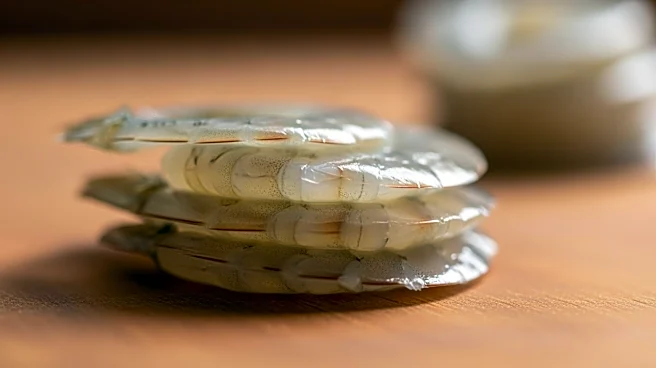
Researchers at the Institute for Bioengineering of Catalonia in Barcelona have developed a new biomaterial derived from shrimp shells, reinforced with nickel. This material mimics the functional properties of plastic while offering high resistance to
water. The development is part of a broader effort to create sustainable alternatives to single-use plastics. The biomaterial represents a potential breakthrough in reducing plastic waste and environmental impact, as it is made from natural, renewable resources.
Why It's Important?
The creation of a plastic-like biomaterial from shrimp shells is significant in the context of global efforts to reduce plastic pollution. Single-use plastics are a major environmental concern, contributing to ocean pollution and harming wildlife. This new biomaterial offers a sustainable alternative, potentially reducing reliance on traditional plastics. The innovation could have wide-ranging implications for industries reliant on plastic, including packaging, consumer goods, and manufacturing. By providing a biodegradable option, it supports environmental sustainability and aligns with increasing consumer demand for eco-friendly products.
What's Next?
The next steps for this biomaterial include further testing and potential commercialization. Researchers will likely focus on scaling production and ensuring the material meets industry standards for various applications. Collaboration with businesses and policymakers could facilitate the adoption of this sustainable alternative in mainstream markets. Additionally, public awareness campaigns may be necessary to educate consumers and industries about the benefits and uses of the biomaterial. The success of this innovation could inspire further research into other natural materials as plastic alternatives.