



What's Happening?
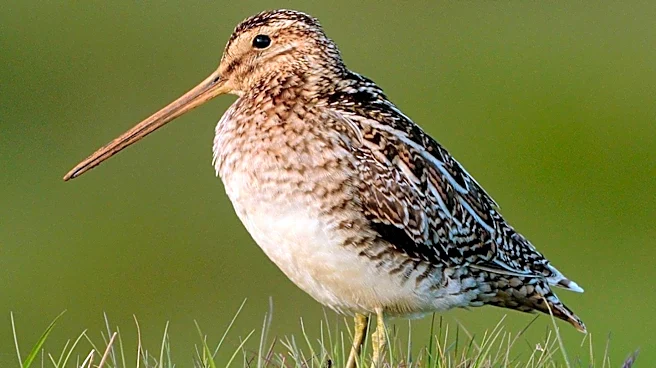
The American woodcock, a small migratory bird known for its distinctive bobbing movement, has become a viral sensation in New York City's Bryant Park. This year, the bird's presence has attracted a significant number of birdwatchers and curious onlookers,
drawn by its quirky 'doodle bop' movements. The woodcock, sometimes referred to as the 'timberdoodle' due to its woodland habitat, typically passes through the New York City area annually. However, this year has seen heightened interest, largely fueled by social media. Visitors from around the world have been gathering in the park, often stumbling upon the spectacle by chance. The bird's presence is expected to continue drawing crowds until mid-April, when it will resume its migratory journey north.
Why It's Important?
The American woodcock's unexpected popularity highlights the growing interest in urban wildlife and birdwatching as a recreational activity. This phenomenon underscores the role of social media in amplifying interest in natural events and wildlife, potentially leading to increased awareness and conservation efforts. The gathering of large crowds in Bryant Park also reflects the public's desire for unique and engaging outdoor experiences, especially in urban settings. This event may encourage city planners and park officials to consider the importance of maintaining and promoting urban green spaces as vital habitats for wildlife and as places for public enjoyment and education.
What's Next?
As the American woodcock continues its stay in Bryant Park, park officials and birdwatchers will likely monitor its movements and interactions with the public. The bird's presence may inspire similar events or initiatives aimed at promoting urban wildlife and conservation awareness. Additionally, the increased foot traffic in Bryant Park could lead to discussions about managing visitor impact on the park's environment and ensuring the safety and well-being of both the wildlife and the public. The woodcock's migration northward will be closely watched by bird enthusiasts, who may use this opportunity to track and study its migratory patterns.