


What's Happening?
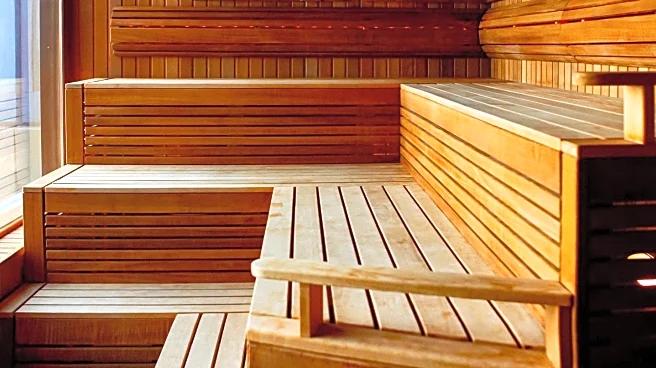
The sauna culture, traditionally a staple in countries like Finland, is gaining traction in the United States as a social and health-enhancing activity. A recent festival in Domino Park, Brooklyn, organized by Culture of Bathe-ing, showcased various sauna experiences,
drawing New Yorkers to participate in this communal activity. The event featured uniquely designed saunas and included talks by sauna historians and aufgussmeisters, or sauna masters, who led rituals and discussions on the benefits of sauna bathing. The festival aimed to promote the social and spiritual aspects of sauna culture, which are often overlooked in the U.S. Robert Hammond, founder of Culture of Bathe-ing, likens the rise of sauna culture to the early days of yoga and coffee culture in the 1990s, suggesting it is at the beginning of a significant cultural shift.
Why It's Important?
The growing interest in sauna culture in the U.S. highlights a shift towards wellness practices that emphasize both physical and social health benefits. Saunas are known to improve cardiovascular health and metabolism, which are particularly beneficial for women in midlife. The social aspect of sauna bathing addresses issues of loneliness, a significant health risk factor. By providing a communal space for relaxation and connection, saunas offer an alternative to traditional social venues like nightclubs. This trend could lead to increased demand for sauna facilities and influence the wellness industry to incorporate more social elements into health practices.
What's Next?
As sauna culture continues to gain popularity, more sauna facilities and events are likely to emerge across the U.S., particularly in urban areas like New York City. The success of the Domino Park festival suggests a growing market for communal wellness experiences. Future developments may include the establishment of permanent sauna venues and the integration of sauna rituals into mainstream wellness programs. Additionally, the involvement of affinity groups and diverse communities in sauna events could foster inclusivity and broaden the appeal of sauna culture.
Beyond the Headlines
The rise of sauna culture in the U.S. may also reflect broader societal trends towards holistic health and wellness. As people seek ways to improve their physical and mental well-being, practices that combine health benefits with social interaction are becoming increasingly attractive. This movement could influence other wellness practices to incorporate more communal and experiential elements, potentially reshaping the landscape of the wellness industry.