





What's Happening?
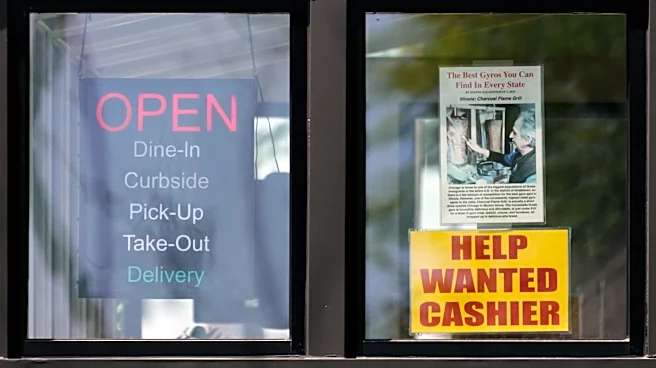
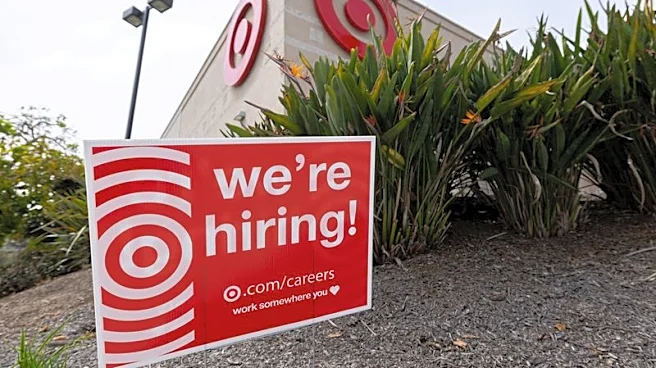
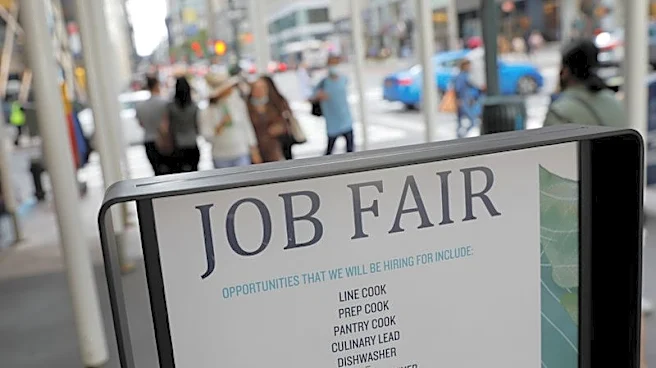
The U.S. job market demonstrated unexpected strength in May, with employers adding 172,000 jobs, nearly double the forecasted amount. The unemployment rate remained steady at 4.3%, according to the Labor Department. This job growth marks a significant
rebound from the previous year, which saw minimal job additions. The hiring surge is broad-based, with local governments, restaurants, bars, and healthcare companies contributing significantly to the employment gains. Despite the positive job numbers, inflation remains a concern, with rising prices for gasoline, groceries, and other essentials. The job market's resilience comes amid economic uncertainty and high energy prices due to ongoing geopolitical tensions.
Why It's Important?
The robust job growth is a positive indicator for the U.S. economy, suggesting a recovery from the previous year's hiring slump. This development is crucial for President Trump, who faces declining approval ratings due to rising inflation and energy costs. The job market's strength could influence public perception ahead of the upcoming midterm elections. However, the persistent inflationary pressures pose a challenge, as they could offset the benefits of job growth. The Federal Reserve may consider raising interest rates to combat inflation, which could impact borrowing costs for consumers and businesses.
What's Next?
The Federal Reserve is likely to consider interest rate hikes in response to the strong job market and rising inflation. This move could lead to higher borrowing costs, affecting mortgages, auto loans, and business financing. The upcoming midterm elections will test whether the job market's strength can sway public opinion in favor of the current administration. Businesses may continue to face challenges in finding skilled workers, as highlighted by companies like Uncle Giuseppe’s Marketplace, which is on a hiring spree but struggles to find qualified candidates.