





What's Happening?
Magna, a major automotive parts supplier, is embedding artificial intelligence (AI) across its manufacturing operations to improve efficiency and predict equipment failures. The company, which supplies components to numerous global automakers, is implementing
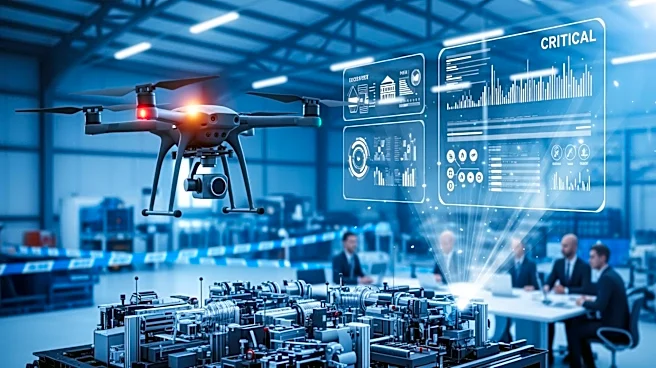
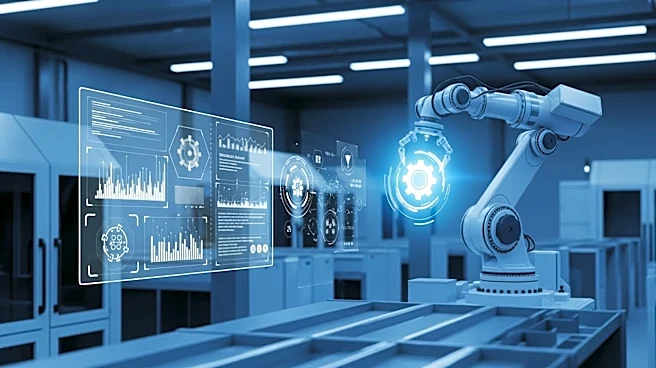
a five-pronged AI strategy focusing on product quality, equipment maintenance, factory safety, energy reduction, and output speed. AI-powered systems are being used to monitor vibration, temperature, and pressure to predict equipment failures, thereby reducing costly downtime. Additionally, Magna is deploying autonomous mobile robots to move heavy materials between workstations. The company is also working towards a 'unified factory' where data, software, and automation systems are interconnected across operations.
Why It's Important?
The integration of AI into Magna's operations signifies a shift towards more intelligent and efficient manufacturing processes in the automotive industry. By predicting equipment failures and optimizing resource use, Magna can reduce operational costs and improve production reliability. This approach not only enhances Magna's competitiveness but also sets a precedent for other manufacturers to follow. The use of AI in supply chain management further amplifies the company's ability to respond to global risks, such as material shortages and trade tensions, with better visibility and faster decision-making. This development could lead to broader adoption of AI technologies in manufacturing, potentially transforming industry standards.
What's Next?
Magna's continued investment in AI suggests a future where manufacturing processes are increasingly automated and interconnected. As the company progresses towards its vision of a 'unified factory,' it may face challenges in integrating diverse systems and ensuring data security. However, successful implementation could lead to significant advancements in manufacturing efficiency and innovation. Other manufacturers may observe Magna's approach and consider similar strategies to enhance their operations. The broader implications for the industry include potential shifts in workforce requirements and the need for new skills to manage and maintain AI-driven systems.