



What's Happening?
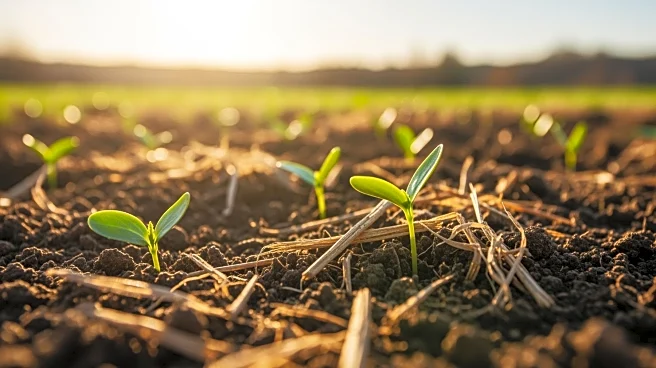
Regenerative agriculture is emerging as a critical strategy for addressing climate change and ensuring sustainable food production. Companies like McCain Foods and Nestlé are investing in regenerative practices to restore soil health, enhance biodiversity, and sequester carbon. These practices aim to create resilient supply chains and reduce environmental impact. However, widespread adoption faces challenges such as farmer hesitation, financial constraints, and the need for standardized metrics. Despite these hurdles, the industry is recognizing the strategic value of regenerative agriculture, with significant investments and pilot programs underway to support the transition.
Why It's Important?
The shift towards regenerative agriculture represents a significant
change in how food is produced, with potential benefits for the environment, economy, and society. By improving soil health and reducing chemical inputs, these practices can lead to more sustainable and resilient agricultural systems. This transition is crucial for mitigating climate change impacts and ensuring food security. The economic benefits, such as reduced input costs and premium pricing opportunities, also make regenerative agriculture an attractive option for businesses. As more companies and farmers adopt these practices, the potential for large-scale environmental and economic improvements increases.