
What's Happening?
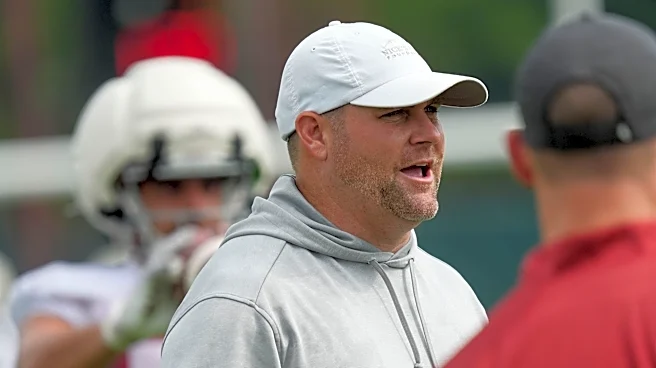
Jim Nagy, the general manager of Oklahoma's football program, has proposed the introduction of a freshman salary cap in college sports. This suggestion comes as part of his efforts to balance player retention,
compensation, and recruitment without disrupting team culture. Nagy, who was hired in early 2025 to model an NFL-style front office, believes that the high acquisition costs for high school players can create friction within the team. He argues that a salary cap for freshmen would help maintain the culture that head coach Brent Venables and his staff have worked hard to develop. Nagy has integrated himself into the program, aligning with Venables' vision and focusing on retaining key players. He acknowledges that any changes will take time but believes that a collective bargaining agreement model, similar to the NFL, could benefit college football.
Why It's Important?
The proposal for a freshman salary cap is significant as it addresses the growing financial pressures in college sports, particularly in football. By capping salaries for incoming freshmen, programs like Oklahoma aim to prevent disparities that could disrupt team dynamics and culture. This move could also set a precedent for other college sports programs, potentially leading to broader changes in how college athletes are compensated. The idea aligns with the ongoing discussions about athlete compensation and the need for a more structured approach, similar to professional sports leagues. If implemented, it could impact recruitment strategies, player retention, and overall team performance, influencing the competitive landscape of college football.
What's Next?
While Nagy's proposal is still in the discussion phase, its implementation would require significant changes in college sports governance. Stakeholders, including university administrations, athletic departments, and possibly the NCAA, would need to engage in discussions about the feasibility and structure of such a cap. The proposal could also prompt other programs to consider similar measures, potentially leading to a collective bargaining agreement model in college sports. As these discussions progress, the response from players, coaches, and other universities will be crucial in determining the future of athlete compensation in college sports.