
What's Happening?
South Carolina's manufacturing sector has experienced significant growth over the past three decades, largely due to the establishment of automotive manufacturing by companies like BMW. The industry now
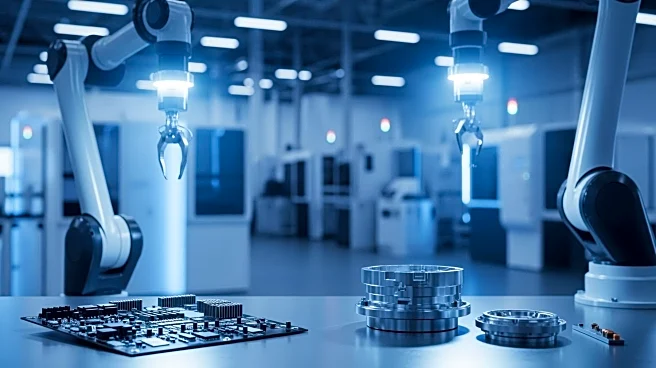
employs between 290,000 and 310,000 people and contributes up to $206 billion annually to the state's economy. However, a recent study by South Carolina Manufacturers & Commerce highlights the potential impact of artificial intelligence on the workforce. While manufacturing jobs are in demand, with positions like assembly line workers and industrial engineers being sought after, automation poses a risk to certain roles. The study suggests that jobs such as inventory clerks and product inspectors are at high risk of being automated. Despite these challenges, the study's author, Joey Von Nessen, notes that the aging workforce and declining birth rates may offset job losses, as fewer young people are entering the job market.
Why It's Important?
The growth of South Carolina's manufacturing sector is crucial for the state's economic prosperity, providing higher-than-average wages and contributing significantly to the local economy. However, the rise of automation and AI presents a dual challenge: while it can increase efficiency and productivity, it also threatens job security for many workers. This situation underscores the need for strategic workforce planning and retraining programs to ensure that workers can adapt to new technologies. The potential reduction in workforce demand due to automation could have broader implications for the state's economy, affecting everything from consumer spending to tax revenues.
What's Next?
As automation continues to advance, South Carolina's manufacturing sector may need to focus on upskilling its workforce to handle new technologies. Companies might increase on-the-job training opportunities, especially as the pool of young workers shrinks. Additionally, the state could see an influx of people moving from other regions, attracted by job opportunities and the growing economy. Policymakers and industry leaders will need to collaborate to address these workforce challenges and ensure that the manufacturing sector remains a vital part of South Carolina's economy.