






What's Happening?
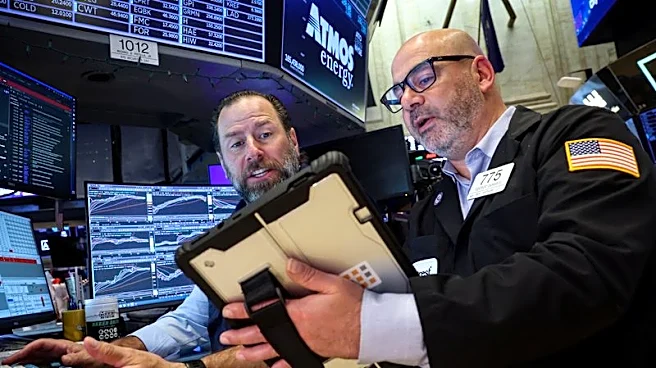
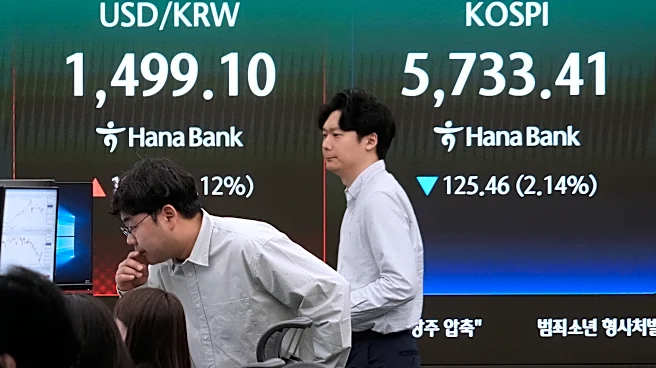
The U.S. stock market experienced a significant rally on April 13, 2026, with the S&P 500 rising by 1%, the Dow Jones Industrial Average adding 301 points (0.6%), and the Nasdaq composite climbing 1.2%. This recovery brought the indices back to levels
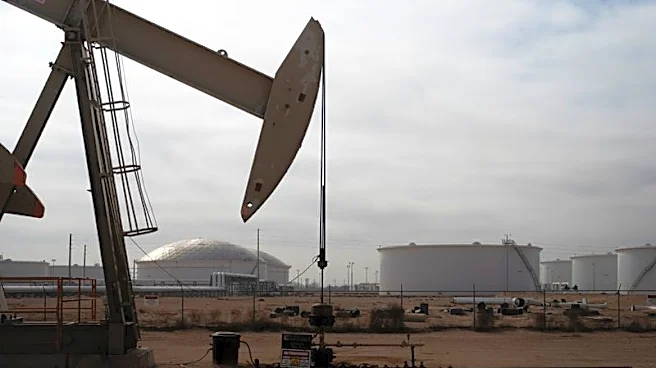
seen before the onset of the U.S.-Iran conflict in late February. The market's rebound comes despite the failure of recent ceasefire talks and President Trump's announcement of a blockade of the Strait of Hormuz, a critical passage for global oil shipments. The blockade aims to pressure Iran by restricting its oil sales, which has led to increased oil prices. Brent crude oil prices rose by 4.4% to $99.36 per barrel, reflecting ongoing tensions. Despite these challenges, the market's movements were more moderate compared to earlier in the conflict, as investors remain hopeful for a resolution that would stabilize oil flows.
Why It's Important?
The stock market's recovery is significant as it reflects investor optimism despite geopolitical tensions that have previously caused volatility. The U.S.-Iran conflict, particularly the blockade of the Strait of Hormuz, has implications for global oil supply and prices, affecting industries reliant on oil. A sustained increase in oil prices could lead to higher inflation and impact consumer spending. However, the market's resilience suggests confidence in the potential for diplomatic resolutions and the ability of major corporations to weather geopolitical disruptions. The performance of major U.S. companies, as they report quarterly earnings, will be crucial in maintaining investor confidence. Strong earnings could offset concerns about geopolitical risks and support continued market stability.
What's Next?
Looking ahead, the market will closely monitor developments in the U.S.-Iran conflict, particularly any progress in diplomatic negotiations or changes in military strategies. The impact of the blockade on global oil prices will be a key factor influencing market dynamics. Additionally, upcoming earnings reports from major corporations, including financial institutions and consumer goods companies, will provide insights into the economic resilience of U.S. businesses. Investors will also watch for any policy responses from the U.S. government that could affect economic conditions, such as measures to mitigate the impact of rising oil prices on inflation and consumer spending.