






What's Happening?
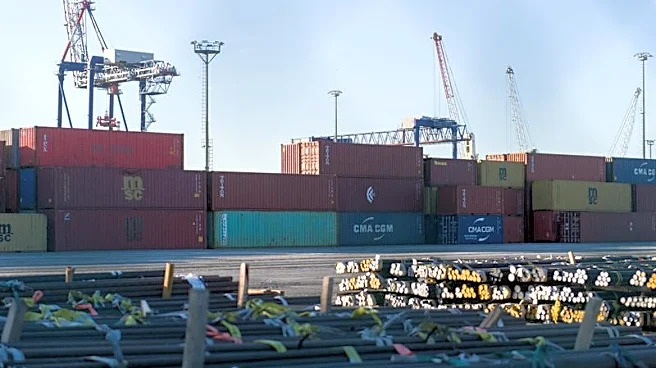
Following a Supreme Court decision against President Trump's use of emergency powers to impose tariffs, the administration is now seeking to mandate tariffs under the U.S. Trade Act. This act allows for retaliatory tariffs against nations engaged in unfair
trade practices, including forced labor. The U.S. Trade Representative has announced investigations into several trading partners, including EU member states, to assess their compliance with labor standards. This has created uncertainty for U.S. companies, which may face increased costs and legal risks if they alter supply chains to avoid tariffs. Companies are advised to maintain stable supplier relationships and avoid abrupt changes that could exacerbate labor rights violations.
Why It's Important?
The ongoing tariff uncertainty poses significant challenges for U.S. businesses, potentially leading to increased costs and disruptions in supply chains. Companies may face legal risks if tariff-related decisions result in labor rights violations, as they could be subject to sanctions under U.S. and international laws. This situation underscores the need for businesses to carefully manage their supply chain strategies to mitigate risks and ensure compliance with human rights standards. The focus on forced labor also highlights the broader implications of trade policies on global labor practices and human rights.
Beyond the Headlines
The volatility in U.S. trade policy not only affects economic relations but also has ethical and legal dimensions. Companies must navigate complex legal frameworks to avoid penalties related to labor violations. This situation calls for a reevaluation of traditional supply contracts, which often place undue responsibility on suppliers. By fostering trust and cooperation through responsible contracting, businesses can enhance transparency and resilience in their supply chains, ultimately protecting workers' rights and ensuring compliance with evolving legal standards.