



What's Happening?
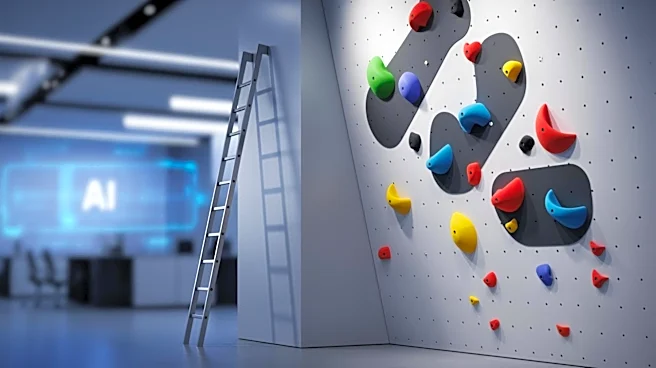
Aneesh Raman, LinkedIn's chief economic opportunity officer, has highlighted a significant shift in career development due to artificial intelligence (AI). According to Raman, the traditional corporate career ladder is being replaced by a 'climbing wall'
model, where careers are no longer linear but move in multiple directions based on individual skills and choices. This change is driven by AI's ability to automate tasks and reshape job roles, prompting workers to rethink their career paths. Raman's insights are detailed in a new book co-authored with LinkedIn CEO Ryan Roslansky, titled 'Open to Work: How to Get Ahead in the Age of AI.'
Why It's Important?
This shift in career dynamics is crucial as it reflects the broader impact of AI on the workforce. The move from a linear career ladder to a more flexible climbing wall model offers workers greater control over their career trajectories, allowing them to leverage their unique skills and interests. However, it also presents challenges, as individuals must adapt to rapidly changing job requirements and continuously update their skills. For businesses, this transformation necessitates a reevaluation of talent management and development strategies to support employees in navigating these new career paths.
Beyond the Headlines
The transition to a climbing wall model has deeper implications for the workforce, including potential stress and uncertainty as traditional career paths become less predictable. It also raises questions about the role of education and training in preparing individuals for a future where adaptability and continuous learning are paramount. As AI continues to evolve, the workforce may see a greater emphasis on soft skills, creativity, and problem-solving abilities, which are less susceptible to automation.