
What's Happening?
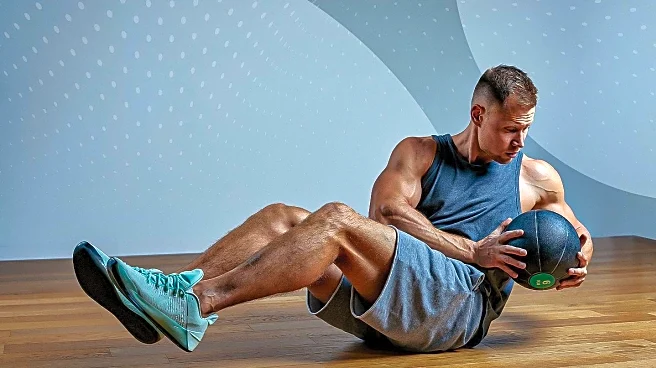
Adaptive fitness exercises, such as the Pallof press, are gaining attention for their ability to enhance core strength and overall physical stability. These exercises involve integrating multiple muscle
groups, including arms, shoulders, hips, and legs, to create a full-body workout. The Pallof press, in particular, is highlighted for its effectiveness in training the core to resist rotational forces, which can improve balance and stability. This exercise involves using a resistance band to create tension and requires the practitioner to maintain a steady torso while extending their arms. Over a period of six months, individuals practicing the Pallof press have reported significant improvements in core strength, making other exercises like squats and deadlifts easier to perform.
Why It's Important?
The significance of adaptive fitness lies in its potential to counteract the natural decline in muscle strength and physical performance that begins around age 35. By engaging in exercises that target core stability and strength, individuals can maintain or even improve their physical capabilities as they age. This approach not only enhances physical health but also supports better performance in daily activities that require balance and strength. The growing popularity of adaptive fitness exercises reflects a broader trend towards personalized and sustainable fitness routines that cater to individual needs and capabilities.
What's Next?
As adaptive fitness continues to gain traction, it is likely that more fitness programs will incorporate these exercises into their routines. Fitness professionals may increasingly recommend adaptive exercises like the Pallof press to clients seeking to improve core strength and stability. Additionally, further research into the long-term benefits of adaptive fitness could lead to new insights into how these exercises can be optimized for different age groups and fitness levels.