






What's Happening?
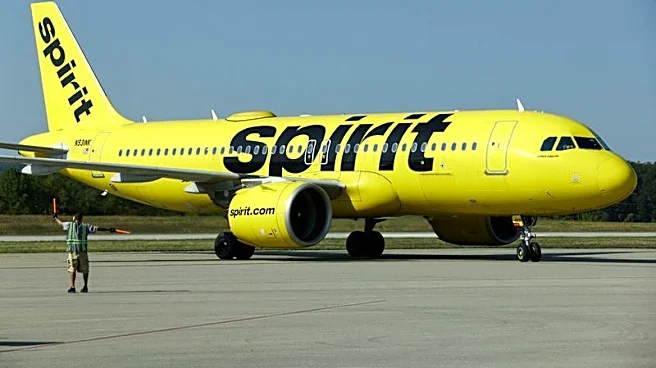
Spirit Airlines is facing a potential liquidation risk due to escalating fuel costs driven by the ongoing conflict with Iran. The airline's reorganization plan, which was set to be approved in a U.S. Bankruptcy Court hearing, has been delayed until April
23 due to objections from creditors. These creditors argue that the plan lacks sufficient information, particularly regarding the impact of rising fuel prices on the airline's finances. Spirit Airlines, which has been operating under Chapter 11 bankruptcy protection, has significantly reduced its fleet and route network. Despite these challenges, the airline remains a major player at Fort Lauderdale-Hollywood International Airport.
Why It's Important?
The potential liquidation of Spirit Airlines could have significant implications for the U.S. airline industry, particularly in the low-cost carrier segment. Spirit's financial struggles highlight the broader challenges faced by airlines due to volatile fuel prices and geopolitical tensions. If Spirit were to cease operations, it could lead to reduced competition and higher fares in the markets it serves. Additionally, the airline's creditors and employees face uncertainty regarding the future of the company. The situation underscores the importance of effective financial management and strategic planning in navigating the complex and often volatile airline industry.
What's Next?
The upcoming court hearing on April 23 will be crucial in determining the future of Spirit Airlines. The airline's management is reportedly negotiating with major creditors to address their concerns and secure approval for the reorganization plan. If an agreement is not reached, Spirit may be forced to liquidate, which would have significant repercussions for its employees, customers, and the broader airline industry. Stakeholders will be closely monitoring the situation, and any developments could prompt reactions from competitors and regulatory bodies.