






What's Happening?
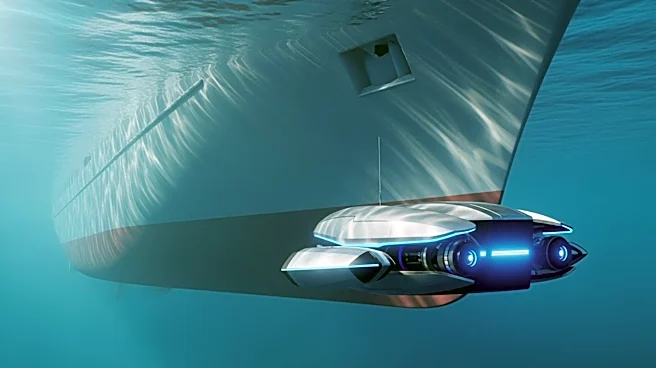
Mitsui O.S.K. Lines (MOL), in collaboration with Innovative Space Carrier and TSUNEISHI SOLUTIONS TOKYOBAY, has received approval in principle (AiP) from the American Bureau of Shipping (ABS) for the basic design of an unmanned autonomous rocket recovery
vessel. This project aims to develop a comprehensive offshore recovery system, which includes the recovery vessel itself, a support vessel, and an onshore control system. The design has been approved for its safety and technical feasibility, marking a significant step forward in offshore rocket recovery operations. MOL has leveraged its extensive experience in the shipping and offshore sectors to develop the operational concept for this platform, which is expected to facilitate more efficient retrieval and reuse of rockets, thereby supporting more frequent launches and reducing costs.
Why It's Important?
The approval of this unmanned rocket recovery vessel design is a pivotal development in the aerospace and maritime industries. By enabling more efficient rocket retrieval and reuse, the project could significantly lower the costs associated with space launches, making space exploration and satellite deployment more accessible. This innovation aligns with the growing trend towards sustainable and cost-effective space operations. The involvement of MOL, a major player in the shipping industry, underscores the increasing convergence of maritime and aerospace technologies. The successful implementation of this project could set a precedent for future collaborations between these sectors, potentially leading to further advancements in autonomous maritime operations.
What's Next?
Moving forward, MOL will continue to refine the design and advance studies towards the implementation of the unmanned rocket recovery vessel. The company plans to work closely with its partners, Innovative Space Carrier and TSUNEISHI SOLUTIONS TOKYOBAY, while receiving ongoing technical advice from ABS. The next steps will likely involve detailed engineering and testing phases to ensure the system's operational readiness. As the project progresses, it may attract interest from other stakeholders in the aerospace and maritime industries, potentially leading to new partnerships and collaborations aimed at enhancing the efficiency and sustainability of space operations.