





What's Happening?
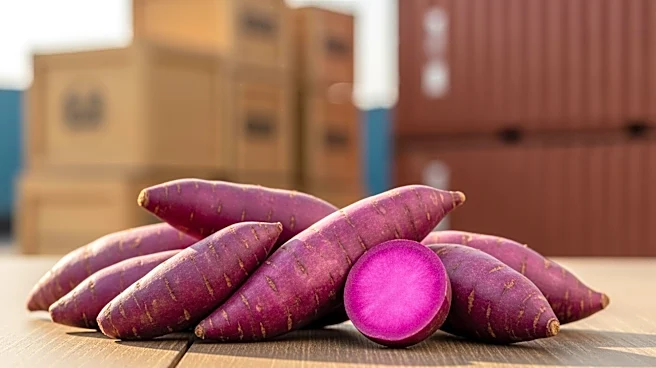
Ube, a purple yam native to the Philippines, has gained international popularity, particularly on social media, leading to increased global demand. However, the supply chain for ube is struggling to keep up, with production in the Philippines declining
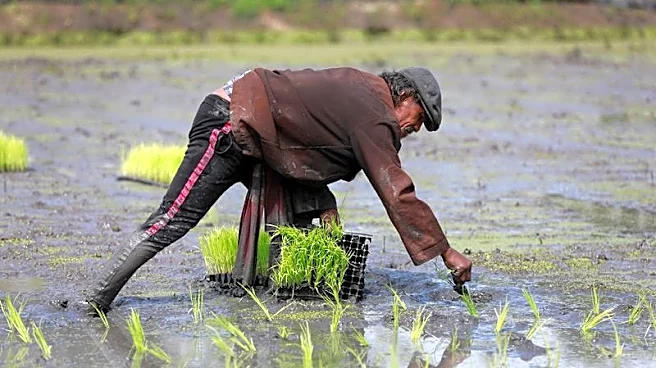
by 6.7% in 2025. Despite a 20% increase in ube exports, farmers are hesitant to grow more due to a lack of financial incentives and logistical challenges. The Philippine government is collaborating with local universities to boost production, targeting markets in the US, UK, and Middle East. Entrepreneurs like Jeffrey Cesari are exploring opportunities to capitalize on ube's popularity, but face difficulties in sourcing authentic and high-quality ube.
Why It's Important?
The surge in demand for ube highlights the growing influence of social media on food trends and consumer preferences. As ube becomes a sought-after ingredient in various culinary creations, the pressure on its supply chain underscores the challenges faced by agricultural producers in meeting global demand. The situation also reflects broader issues in the agricultural sector, such as the need for sustainable farming practices and fair compensation for farmers. The success of ube in international markets could provide economic opportunities for Filipino farmers, but only if supply chain inefficiencies are addressed.
What's Next?
Efforts to increase ube production are underway, with initiatives like the Bohol Ube Project aiming to secure stable contracts for farmers. However, convincing farmers to expand production remains a challenge. The ongoing energy crisis in the Philippines, exacerbated by geopolitical tensions, further complicates the situation by increasing production costs. As the global market for ube continues to grow, stakeholders will need to address these challenges to ensure a reliable supply chain and equitable benefits for producers.