



What's Happening?
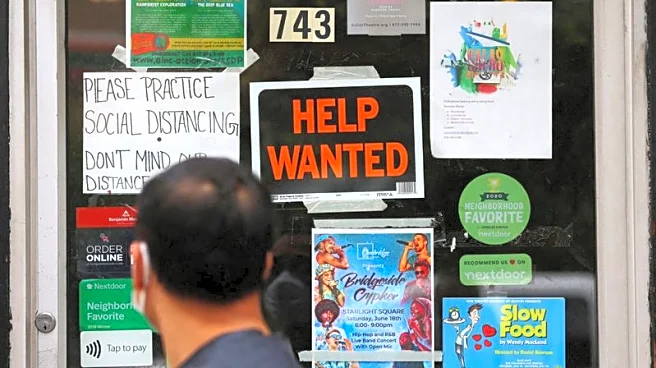
In 2025, the United States experienced its lowest job growth for a non-recession year since 2003, with only 181,000 jobs added, according to new data. This figure represents an average of just 15,000 job gains per month, a significant decrease from the initially reported pace of 49,000. The Bureau of Labor Statistics also revised employment figures for the previous year, reducing the total by 898,000. Despite the low job growth, the unemployment rate decreased slightly to 4.3%. The report indicates that job gains were concentrated in sectors like construction and healthcare, while government and financial activities saw job losses.
Why It's Important?
The sluggish job growth in 2025 highlights ongoing challenges in the U.S. labor market, despite a non-recessionary
economic environment. The low job creation rate could impact consumer confidence and spending, which are critical drivers of economic growth. The Federal Reserve's decision to maintain interest rates may be influenced by these employment figures, as they suggest limited slack in the labor market. The concentration of job gains in specific sectors, coupled with losses in others, points to an uneven recovery that could have long-term implications for economic stability and workforce development.
What's Next?
The Federal Reserve is likely to keep interest rates steady in response to the latest jobs report, as it suggests limited room for rate cuts in the near term. Policymakers and economists will continue to monitor labor market trends to assess the need for potential interventions to stimulate job growth. The focus may shift towards addressing structural issues in the labor market, such as skills mismatches and sectoral imbalances, to promote more robust and inclusive employment growth.