
What's Happening?
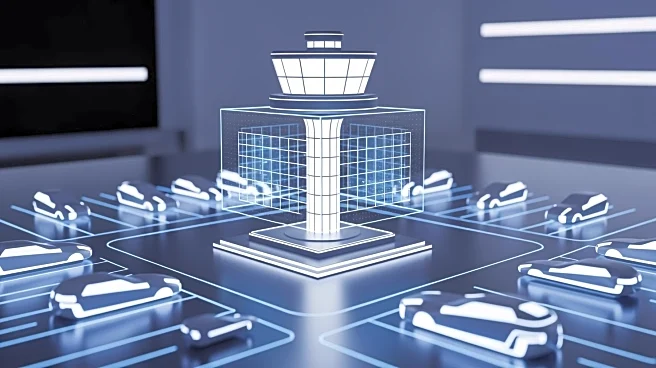
Autolane, a startup led by CEO Ben Seidl, is pioneering an 'air traffic control' system designed to assist autonomous vehicles in navigating complex environments like fast food drive-thrus and retail parking
lots. This initiative aims to address the challenges self-driving cars face on American roads, which are traditionally designed for human drivers. Autolane's system is not intended for public streets but focuses on private retail spaces, providing a business-to-business solution for companies like Costco and McDonald's. The company has secured $7.4 million in venture capital funding to develop this infrastructure, which will help autonomous vehicles manage pick-up and drop-off logistics efficiently.
Why It's Important?
The development of Autolane's system highlights a significant shift in the transportation and retail industries as they adapt to the growing presence of autonomous vehicles. By focusing on private retail environments, Autolane addresses a niche yet critical aspect of the autonomous vehicle ecosystem, potentially enhancing operational efficiency for businesses. This innovation could lead to reduced congestion and improved service delivery in high-traffic retail areas. However, it also underscores the broader challenge of integrating self-driving technology into existing urban landscapes, which are not yet optimized for such advancements.
What's Next?
As Autolane continues to develop its system, the next steps involve refining the technology to ensure seamless integration with existing retail operations. The company may also explore partnerships with additional retail giants to expand its reach. Meanwhile, the broader industry will likely monitor Autolane's progress as a case study in the practical application of autonomous vehicle technology. The success of this initiative could influence future urban planning and the design of retail spaces to better accommodate autonomous vehicles.
Beyond the Headlines
The focus on private retail spaces rather than public infrastructure raises questions about the future of urban design and the role of autonomous vehicles in reshaping city landscapes. While Autolane's solution addresses immediate logistical challenges, it also highlights the need for a more comprehensive approach to urban planning that considers the integration of autonomous technology. This development could spark discussions among urban planners, policymakers, and businesses about the long-term implications of self-driving cars on city infrastructure and mobility.