




What's Happening?
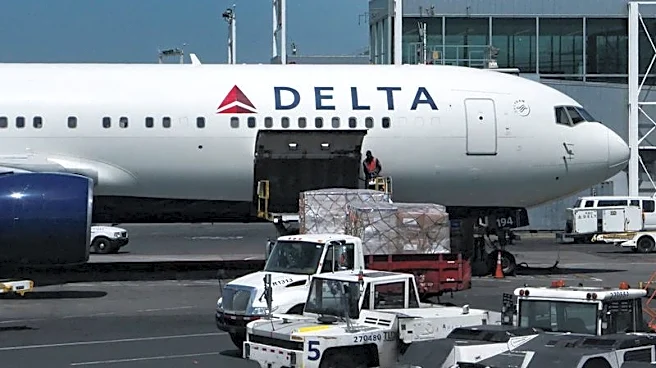
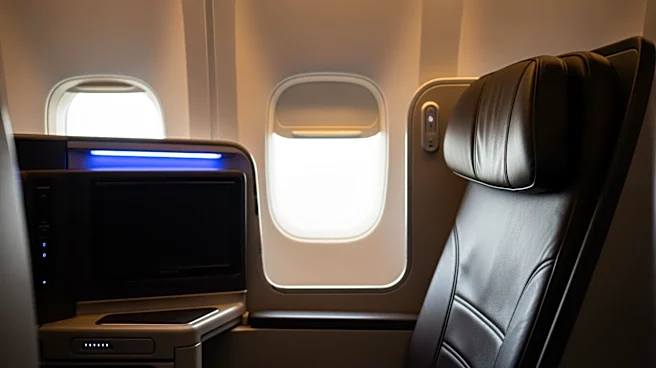
Airlines are increasingly using older aircraft, such as the Boeing 767, by updating their interiors to maintain a modern passenger experience. Despite their age, these planes are equipped with the latest cabin comforts, including new seats and inflight
entertainment systems. This trend is partly due to a slowdown in aircraft production following the COVID-19 pandemic, which has led to supply chain disruptions and delays in new aircraft deliveries. Airlines like United and Delta are extending the service life of their older fleets by investing in interior refurbishments, ensuring that passengers enjoy a contemporary travel experience without being aware of the aircraft's age.
Why It's Important?
The decision to extend the service life of older aircraft through interior upgrades has significant implications for the aviation industry. It allows airlines to manage costs effectively by avoiding the high expenses associated with purchasing new planes. This strategy also helps airlines maintain capacity and meet passenger demand despite production delays. For passengers, the focus on interior upgrades ensures a comfortable and modern travel experience, which is crucial for customer satisfaction and loyalty. Additionally, this approach highlights the industry's adaptability in managing operational challenges and optimizing resources in a post-pandemic environment.
What's Next?
As airlines continue to face production delays, the trend of refurbishing older aircraft is likely to persist. Airlines may further invest in innovative cabin technologies and materials to enhance passenger comfort and reduce maintenance costs. The industry could also see increased collaboration with suppliers to streamline the procurement and installation of new cabin components. In the long term, as production levels normalize, airlines may gradually phase out older models in favor of more fuel-efficient and technologically advanced aircraft. However, the current focus on maximizing the utility of existing fleets will remain a key strategy for managing operational efficiency and financial performance.