
What's Happening?
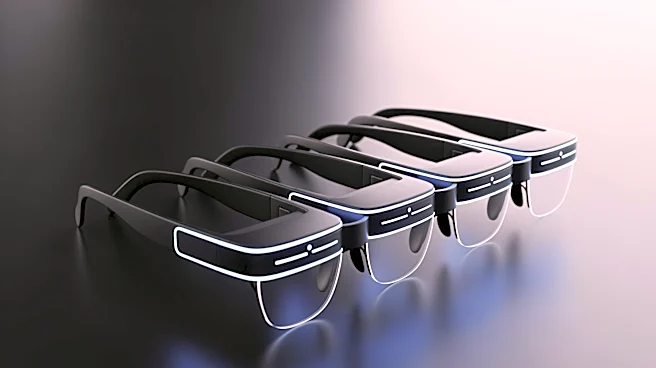
In 2026, excitement is building around the release of new smart glasses models by major tech companies such as Samsung and Snap. These companies are transitioning from prototypes to market-ready products,
with a focus on integrating advanced sensors and AI assistants rather than traditional displays. Samsung's 'Jinju' model, for instance, is expected to feature a 12MP camera and bone-conduction speakers, priced between $380 and $500. Snap has confirmed a partnership with Qualcomm to use the Snapdragon XR platform, promising enhanced AI capabilities and improved battery life. Meanwhile, Nothing is planning to release affordable AI glasses that connect to smartphones, emphasizing voice and vision assistants over large displays. These developments indicate a shift towards practical, everyday augmented reality (AR) applications.
Why It's Important?
The introduction of these smart glasses represents a significant step in making augmented reality more accessible and integrated into daily life. By focusing on AI and sensor technology, these devices aim to provide practical benefits such as improved user interaction and longer battery life, which are crucial for widespread adoption. The competitive pricing strategy, particularly by Samsung and Nothing, could democratize access to AR technology, potentially transforming how consumers interact with digital content. This shift could also stimulate further innovation in the tech industry, as companies strive to enhance user experience and functionality in wearable technology.
What's Next?
As these smart glasses enter the market, consumer feedback will likely drive further refinements and innovations. Companies may focus on enhancing AI capabilities and expanding the range of applications for these devices. Additionally, privacy concerns, particularly with features like facial recognition, could prompt regulatory scrutiny and influence future design considerations. The success of these products could also encourage other tech companies to invest in similar technologies, potentially leading to a more competitive and diverse market for smart wearables.