






What's Happening?
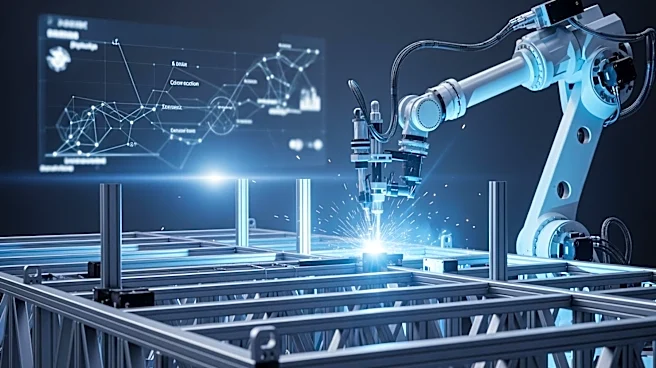
The construction industry is witnessing advancements in robotic construction through autonomous sequencing and error recovery. These technologies enable robots to perform complex tasks such as structural assembly and masonry, traditionally requiring skilled
labor. Autonomous task sequencing determines the order of operations, while error recovery allows robots to identify and fix problems without halting the process. Innovations like Learning from Demonstration (LfD) and large language models (LLMs) are enhancing robots' ability to adapt to changing site conditions. These developments are crucial for sustained autonomous operation in unstructured environments like construction sites.
Why It's Important?
The integration of autonomous sequencing and error recovery in construction robotics represents a significant leap forward in the industry's technological evolution. These advancements address the challenges of labor shortages and the need for increased efficiency in construction projects. By enabling robots to operate independently and adapt to dynamic environments, the industry can reduce reliance on manual labor and improve project timelines. This shift towards automation and intelligent systems is likely to drive innovation and competitiveness in the construction sector, paving the way for more complex and large-scale projects.
Beyond the Headlines
The adoption of these technologies raises important considerations regarding workforce dynamics and the future of skilled labor in construction. As robots take on more tasks, there may be a need for retraining and upskilling workers to manage and maintain these systems. Additionally, the ethical implications of increased automation, such as job displacement and data privacy, must be addressed. The construction industry will need to balance technological advancements with human factors to ensure a sustainable and inclusive future.