

What's Happening?
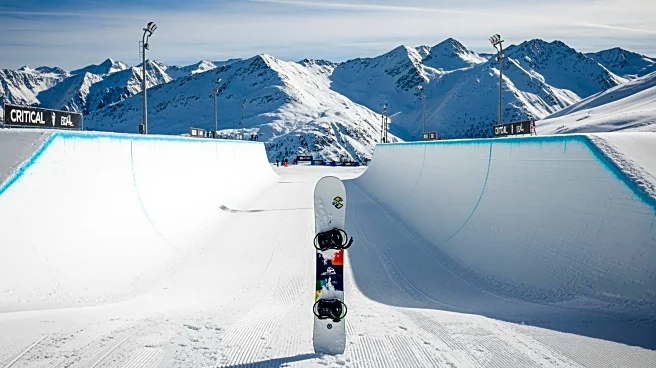
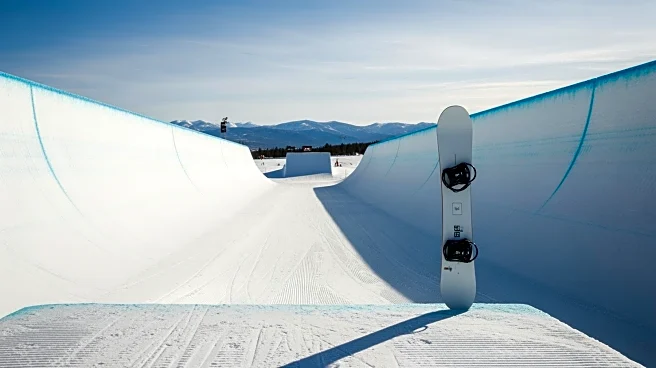
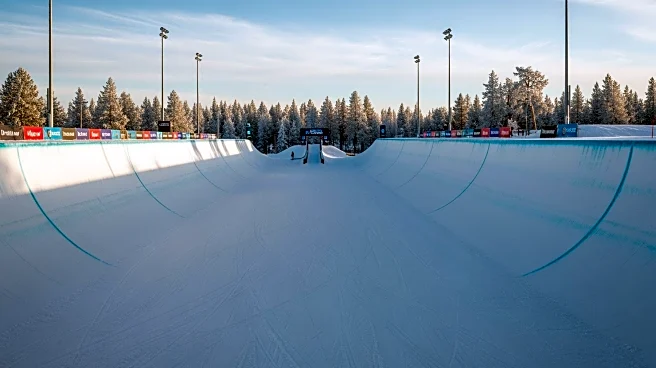
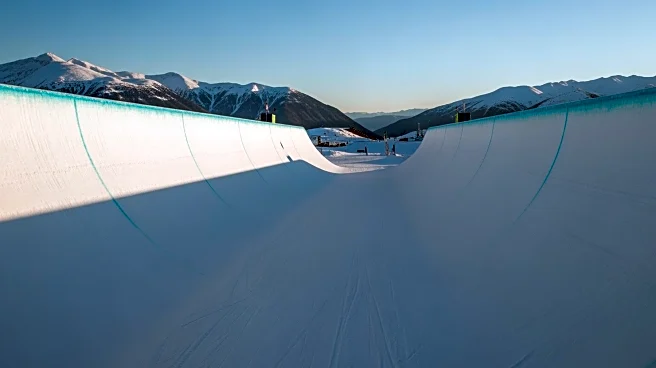
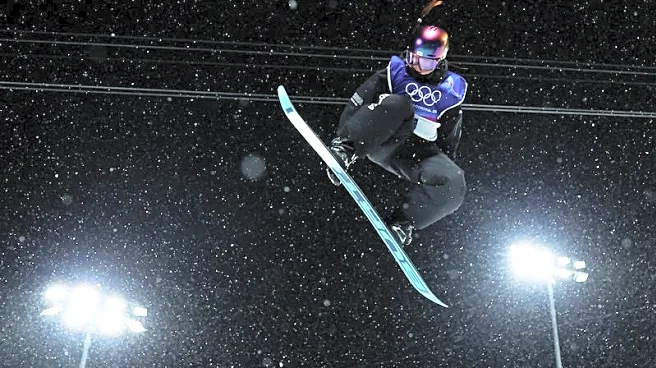
Yuto Totsuka of Japan claimed the gold medal in the men's snowboard halfpipe event at the 2026 Winter Games in Livigno. Totsuka, who previously won the World Championships in halfpipe four years ago, delivered a stellar performance with a score of 95 points. This victory marks a significant achievement for Totsuka, who had not medaled in his last two Olympic appearances. The competition was noted for its high level of performance, with Japan also securing third and fourth places. Australian snowboarder Scotty James, a decorated athlete with previous Olympic bronze and silver medals, finished in second place after a strong run. The American team, however, did not reach the podium, with Jake Pates finishing eighth, Alessandro Barberry tenth, and Chase
Josey eleventh. Despite the lack of medals, Josey remarked on the elevated standard of competition, suggesting that the top five runs could have won gold in previous years.
Why It's Important?
The results of the men's halfpipe event highlight the increasing competitiveness and evolving standards in the sport of snowboarding. Japan's dominance in the event underscores the country's growing prowess in winter sports, potentially influencing future training and investment strategies in snowboarding. For the United States, the absence from the podium serves as a wake-up call, indicating the need for enhanced training and development to remain competitive on the world stage. The event also reflects the broader trend of international athletes challenging traditional powerhouses in winter sports, which could lead to a more diverse and competitive field in future competitions.
What's Next?
Looking ahead, the American snowboarding team may need to reassess their training programs and strategies to improve their performance in future competitions. With the next Winter Games scheduled for 2030, there is an opportunity for the U.S. team to regroup and focus on closing the gap with leading nations like Japan. Additionally, the success of athletes like Yuto Totsuka could inspire a new generation of snowboarders in Japan and other countries, potentially leading to increased participation and interest in the sport. The evolving standards in the halfpipe competition may also prompt changes in judging criteria and training techniques as athletes continue to push the boundaries of what is possible.