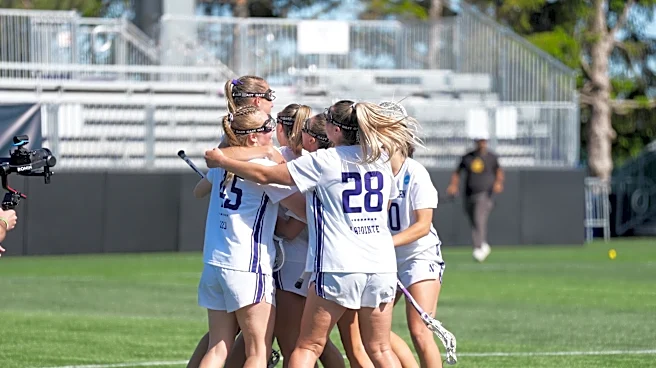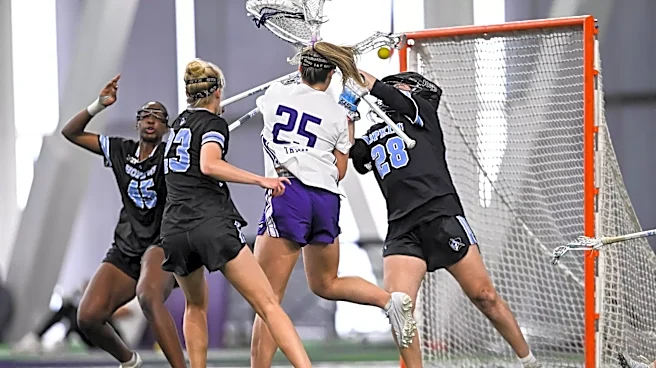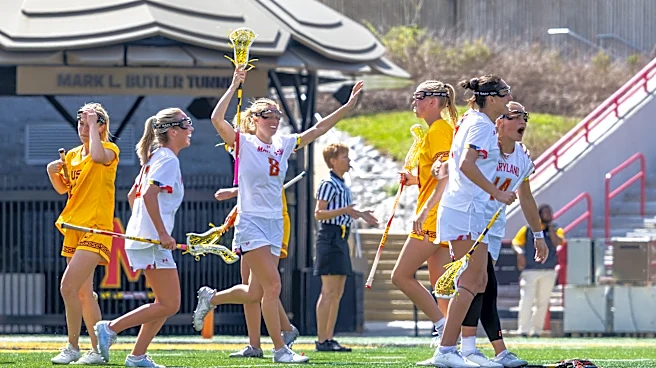

What's Happening?
The NCAA women's lacrosse championship is set to take place on Sunday, May 24, at noon ET, featuring a highly anticipated rematch between Northwestern and North Carolina. The game will be held at Martin
Stadium in Evanston, Illinois, marking the second consecutive year these two teams meet in the championship. Northwestern, the No. 1 seed, secured their spot in the final after a thrilling 17-16 overtime victory against North Carolina earlier in the season. This victory was pivotal in earning them the top seed, despite losses to Colorado, Syracuse, and Ohio State during the regular season. North Carolina, holding a 19-1 record, seeks to avenge their only loss of the season and claim their third title in five years. The match will showcase the nation's top two scorers, with UNC's Chloe Humphrey and Northwestern's Madison Taylor expected to play key roles.
Why It's Important?
This championship game is significant as it highlights the dominance of Northwestern and North Carolina in women's college lacrosse. Both teams have consistently been at the top of the rankings, and their rivalry adds an exciting narrative to the sport. The outcome of this match could influence future seeding and perceptions of team strength in NCAA women's lacrosse. Additionally, the game provides a platform for standout players like Chloe Humphrey and Madison Taylor to showcase their talents on a national stage, potentially impacting their future careers in professional lacrosse or coaching. The event also draws attention to women's sports, promoting greater visibility and support for female athletes.
What's Next?
Following the championship, the winning team will celebrate their victory, adding to their legacy in NCAA women's lacrosse history. The result may also impact recruitment and team strategies for the next season, as both programs aim to maintain or improve their competitive edge. Fans and analysts will likely discuss the performances and strategies employed during the game, influencing coaching decisions and player development in the future. Additionally, the NCAA may review the tournament's format and seeding process to ensure fairness and competitiveness in upcoming seasons.