
What's Happening?
Christopher Nolan has addressed criticisms regarding the historical accuracy of his upcoming film 'The Odyssey', which is an adaptation of Homer's epic poem. Critics have pointed out that the armor worn
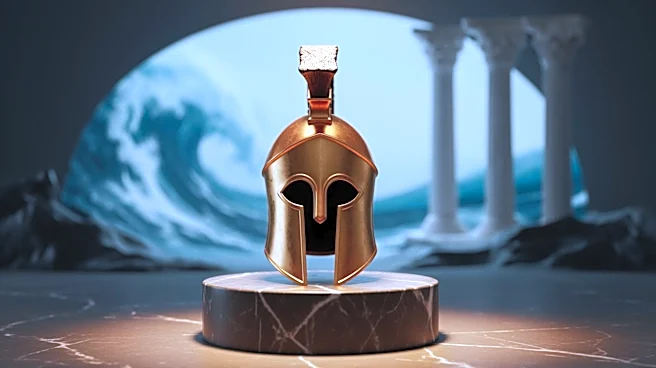
by Agamemnon, played by Benny Safdie, resembles Batman's suit and appears unrealistic for the ancient Greek setting. Nolan defended the creative choices, explaining that the film is set at the end of the Bronze Age, a period with limited archaeological records. He emphasized that the costume design aimed to reflect the character's elevated status through expensive materials, and that historical depictions often reflect the era in which they were created.
Why It's Important?
The debate over historical accuracy in 'The Odyssey' highlights the ongoing tension between artistic interpretation and historical fidelity in filmmaking. Nolan's defense underscores the challenges directors face in balancing creative vision with audience expectations for authenticity. This discussion is particularly relevant for films based on historical or mythological sources, where the line between fact and fiction is often blurred. The film's reception could influence future adaptations of classical literature, as filmmakers navigate the expectations of modern audiences while staying true to the spirit of the original works.
What's Next?
As 'The Odyssey' approaches its release date on July 17, 2026, it will be interesting to see how audiences and critics respond to Nolan's interpretation. The film's success could depend on its ability to engage viewers with its storytelling and visual spectacle, despite the historical liberties taken. The discussion around historical accuracy may continue to evolve, potentially impacting marketing strategies and public perception. Nolan's previous work, such as 'Interstellar', faced similar scrutiny, suggesting that the director is accustomed to navigating such debates.