



What's Happening?
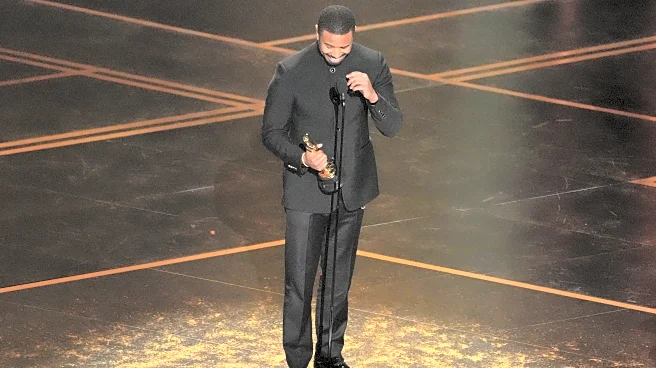
Sean Penn has been awarded the Oscar for Best Supporting Actor for his role in the political drama 'One Battle After Another,' directed by Paul Thomas Anderson. Despite his win, Penn did not attend the ceremony, marking the fourth time he has been absent
from the Oscars when nominated. His portrayal of Col. Steven J. Lockjaw, a seasoned political strategist, was praised for its depth and intensity. The film explores the complexities of political movements and the personal toll on those involved. Penn's absence from the ceremony was noted by Kieran Culkin, who announced his win. Penn is currently in Ukraine, where he has been actively supporting the country amidst ongoing conflict, a commitment acknowledged by Ukrainian President Volodymyr Zelenskyy.
Why It's Important?
Sean Penn's win and his absence from the Oscars highlight his dual role as both an acclaimed actor and an active humanitarian. His involvement in Ukraine underscores the intersection of celebrity influence and global politics, demonstrating how public figures can leverage their platforms for advocacy. This event also reflects the broader trend of actors engaging in international issues, potentially influencing public opinion and policy. Penn's continued support for Ukraine amidst its conflict with Russia brings attention to the situation, potentially impacting international relations and humanitarian efforts.
What's Next?
Sean Penn's ongoing presence in Ukraine suggests continued advocacy and support for the country. His actions may inspire other public figures to engage more deeply with international issues. In Hollywood, Penn's absence from major award ceremonies could prompt discussions about the role of celebrities in political and humanitarian efforts. The film 'One Battle After Another' may gain further attention due to Penn's involvement, potentially influencing its reception and impact.
Beyond the Headlines
Penn's decision to prioritize his humanitarian work over attending the Oscars raises questions about the responsibilities of public figures in times of global crisis. It challenges traditional expectations of celebrity behavior and highlights the potential for actors to influence real-world events beyond their on-screen roles. This development may encourage a reevaluation of how fame and influence are utilized in addressing global challenges.