


What's Happening?
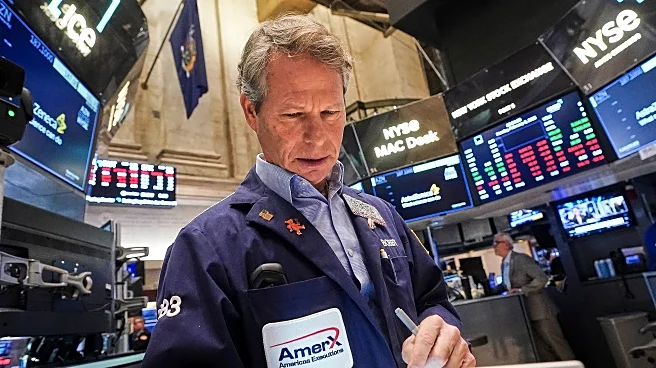
U.S. stock markets have been mixed following a week of economic and geopolitical uncertainty. Major indexes, including the S&P 500 and Nasdaq, experienced fluctuations as investors reacted to various factors, including Federal Reserve policies and geopolitical tensions. The dollar reached a six-week high, influenced by strong U.S. labor market data, while oil prices rose due to supply concerns. The AI sector saw renewed interest following positive results from chipmaker TSMC. Meanwhile, a proposed cap on credit card interest rates impacted financial stocks, despite strong earnings from major banks.
Why It's Important?
The volatility in U.S. stock markets reflects the complex interplay of economic policies, geopolitical events, and market sentiment. The Federal Reserve's
approach to interest rates and inflation management is crucial for economic stability, influencing investor confidence and market performance. Geopolitical tensions, such as those involving Iran, add to market uncertainty, affecting commodity prices and investment strategies. The proposed interest rate cap highlights the potential impact of regulatory changes on financial institutions. These developments underscore the importance of monitoring economic indicators and policy decisions to navigate market challenges.
What's Next?
Investors will be closely watching the Federal Reserve's actions and any potential changes in leadership, as these will significantly impact market dynamics. The upcoming earnings season will provide further insights into corporate performance and economic conditions. Geopolitical developments, particularly in the Middle East, will continue to influence commodity prices and market sentiment. The financial sector will need to adapt to potential regulatory changes, such as the proposed interest rate cap. Overall, stakeholders will be looking for stability and clarity in economic policies to guide investment decisions.