





What's Happening?
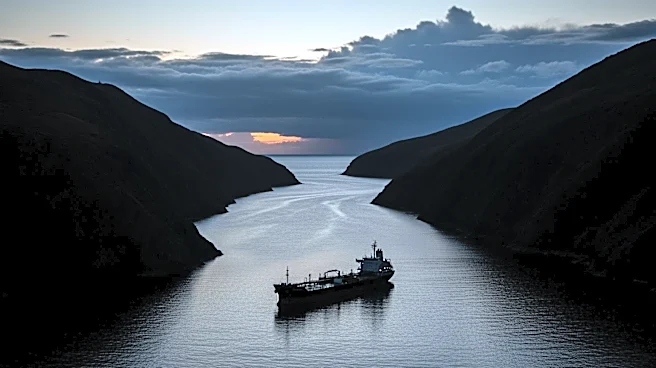
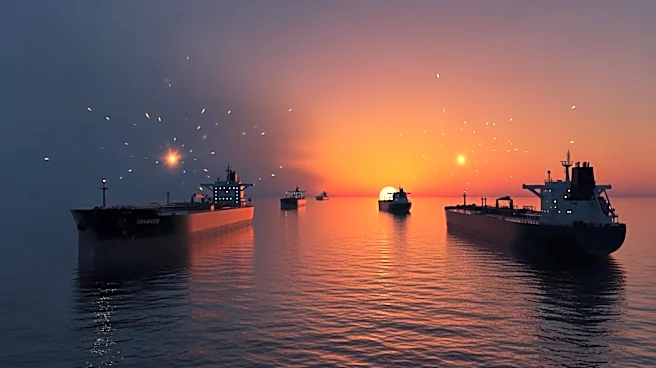
Barclays has issued a warning that the ongoing disruptions in oil and gas flows through the Strait of Hormuz are significantly underpriced in current oil futures and energy equities. Despite the U.S. extending a ceasefire with Iran, the blockade of Iranian
ports continues, leading to tight physical markets. Over 600 million barrels of oil have been blocked, and more than 10 million barrels per day are shut in. The situation has left an estimated 20,000 seafarers stranded on vessels in the Persian Gulf, facing security threats. Barclays suggests that the market has not fully accounted for the scale of disruption, recommending investors to build positions in anticipation of higher oil prices.
Why It's Important?
The continued disruption in the Strait of Hormuz is a critical issue for global energy markets. The Strait is a vital passage for oil shipments, and any prolonged blockage can lead to significant economic impacts worldwide. Barclays' warning highlights the potential for increased oil prices, which could affect various sectors, including transportation and manufacturing. Investors and stakeholders in the energy market need to be aware of these risks and adjust their strategies accordingly. The situation also underscores the geopolitical tensions in the region, with potential implications for international relations and economic stability.
What's Next?
As the situation in the Strait of Hormuz remains unresolved, stakeholders in the energy market will be closely monitoring developments. The U.S. and Iran may engage in further negotiations to address the blockade and restore oil flows. Investors may need to adjust their portfolios to account for potential price increases in oil and energy equities. The international community may also seek diplomatic solutions to ensure the security of this critical maritime route and prevent further economic disruptions.