
What's Happening?
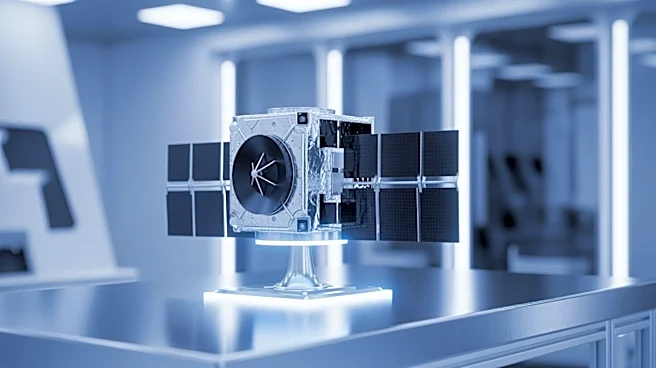
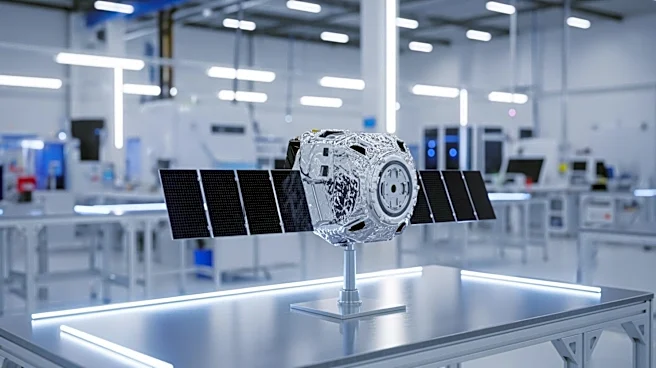
Muon Space, a Silicon Valley-based company, is significantly expanding its workforce following a series of high-value defense contracts and a $146 million Series B funding round. The company is transitioning
from bespoke satellite missions to mass-scale constellation production, supported by a new 130,000-square-foot facility in San Jose capable of producing up to 500 satellites annually. This expansion is part of Muon Space's 'Mission Foundry' model, which aims to automate satellite production and deliver operational outcomes rather than just hardware. The company has been integrated into the U.S. military's proliferated satellite architectures and has secured contracts such as the Missile Defense Agency's SHIELD IDIQ program and a $44.6 million SBIR Phase III contract from the U.S. Space Force.
Why It's Important?
The expansion of Muon Space's workforce and its shift to constellation-scale manufacturing is significant for the U.S. satellite industry and defense sector. By increasing its production capacity, Muon Space is poised to meet the growing demand for satellite-based data services, particularly from government clients seeking 'Data-as-a-Service' arrangements. This move could enhance the U.S. military's capabilities in space-based environmental monitoring and intelligence gathering, providing tactical advantages in contested environments. Additionally, the company's integration of advanced technologies, such as the MuSat-XL platform and SpaceX Starlink mini-laser terminals, positions it as a key player in the rapidly evolving space industry.
What's Next?
Muon Space plans to continue its hiring surge through late 2026 as it prepares for the deployment of its 20-satellite launch manifest over the next 20 months. The company is also gearing up for its first orbital tests of persistent optical connectivity via the Starlink network in 2027. These developments suggest that Muon Space will play a crucial role in advancing satellite technology and expanding the capabilities of U.S. space operations. The company's focus on vertical integration and in-house manufacturing could also lead to reduced lead times and costs, further strengthening its competitive position in the market.