









What's Happening?
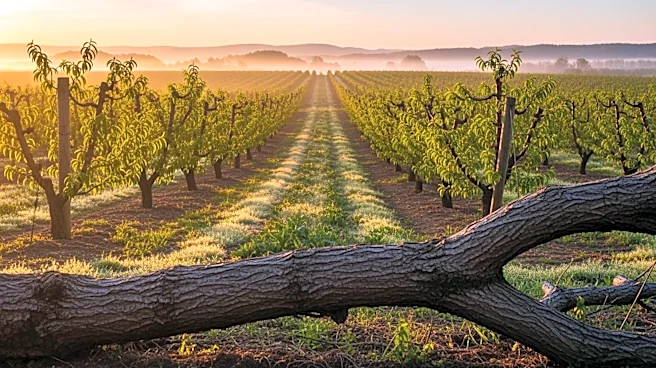
California farmers are facing a significant challenge as they prepare to destroy approximately 420,000 peach trees. This drastic measure comes after Del Monte Foods closed its canneries, which processed a substantial portion of the state's cling peaches.
The closure, a result of Del Monte's Chapter 11 bankruptcy filing, has left farmers with a surplus of fruit and no buyer. The U.S. Department of Agriculture has approved $9 million in federal aid to assist farmers in removing the trees and transitioning to more profitable crops. This decision follows a request from over 40 California lawmakers who sought financial support to stabilize the region's agricultural economy. The loss of long-term contracts with Del Monte, valued at over $550 million, has compounded the financial strain on farmers, who are already dealing with tariffs, drought, and rising operational costs.
Why It's Important?
The closure of Del Monte's canneries and the subsequent destruction of peach trees highlight the vulnerabilities in the agricultural supply chain and the broader economic impacts of corporate bankruptcies. For California's agricultural sector, this development represents a significant economic loss, affecting not only the farmers but also the local communities dependent on agricultural jobs. The federal aid aims to mitigate some of these impacts by helping farmers transition to other crops, but the long-term economic consequences remain uncertain. The situation underscores the need for diversified agricultural practices and the importance of adapting to changing market demands and environmental conditions.
What's Next?
Farmers are expected to begin the process of removing the peach trees and exploring alternative crops that could offer better financial returns. The transition will require careful planning and investment, as crops like almonds and prunes, while potentially more lucrative, involve significant time and financial resources to cultivate. The federal aid will provide some relief, but farmers will need to navigate the complexities of changing market conditions and environmental challenges. Stakeholders, including government agencies and agricultural organizations, will likely continue to monitor the situation and provide support where possible.