

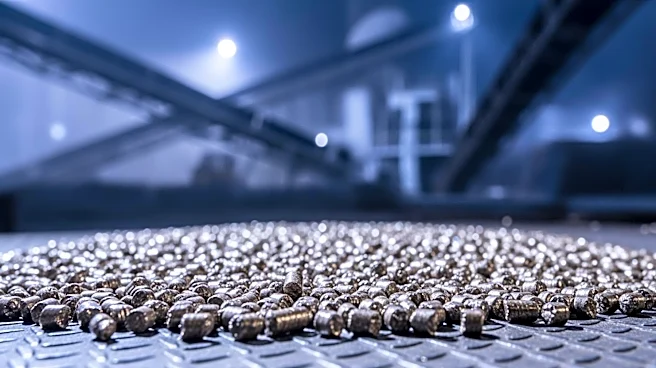
What's Happening?
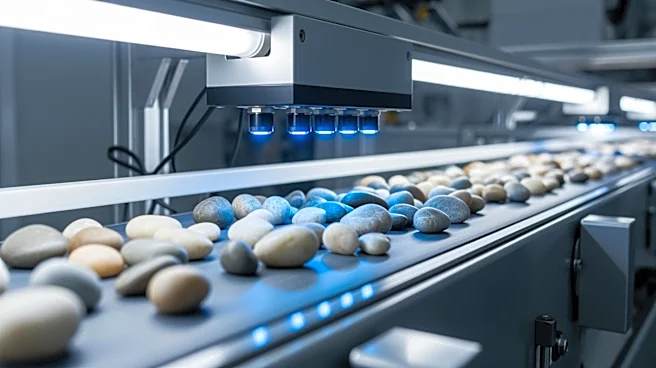
The mining industry is increasingly adopting pebble sorting technology to address inefficiencies in grinding circuits. As energy costs rise and ore grades decline, miners are focusing on improving productivity from existing assets. Pebble sorting, particularly
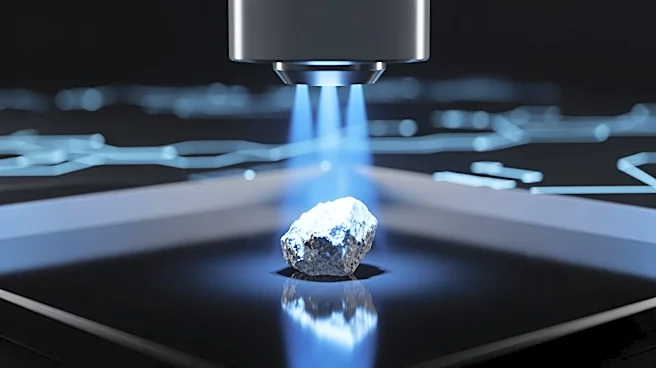
using X-ray Transmission (XRT) systems, allows for the separation of higher-value material from low-grade or barren rock. This technology analyzes individual pebble particles based on atomic density, enabling the rejection of lower-value pebbles before they consume further grinding energy. This approach is part of a broader shift towards selective processing, moving away from traditional bulk processing methods.
Why It's Important?
The adoption of pebble sorting technology represents a significant shift in the mining industry towards more efficient and sustainable practices. By reducing the energy consumption and wear on equipment associated with processing low-value material, mining operations can increase throughput and improve profitability. This technology also aligns with the industry's goal of maximizing value per tonne processed, rather than simply maximizing the volume of material processed. As a result, mining companies can achieve better resource utilization and potentially reduce their environmental impact.
Beyond the Headlines
The implementation of pebble sorting technology could lead to long-term changes in how mining operations are designed and managed. By focusing on the internal composition of materials rather than just size, the industry may see advancements in other areas of mineral processing. However, the technology also introduces new challenges, such as the need for stable material presentation and the risk of discarding valuable particles. As the industry continues to explore these technologies, there may be further developments in sensor-based sorting and other innovative approaches to mineral processing.