

What's Happening?
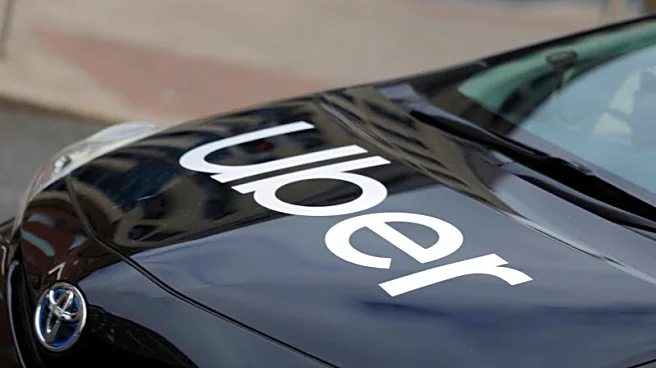
Uber and Rivian have entered into a partnership valued at up to $1.25 billion to advance their autonomous vehicle initiatives. The agreement includes Uber's investment in Rivian, contingent on meeting specific autonomous performance milestones by 2031.
Initially, Uber will invest $300 million, pending regulatory approval. The plan involves Uber purchasing 10,000 Rivian R2 robotaxis, with an option for up to 40,000 more by 2030. These vehicles will be exclusively available on Uber's platform. The deployment will start in San Francisco and Miami in 2028, expanding to over 25 cities by 2031. Rivian's CEO, RJ Scaringe, expressed excitement about the partnership, highlighting the company's advancements in autonomy. Uber's CEO, Dara Khosrowshahi, praised Rivian's integrated approach to vehicle and software development.
Why It's Important?
This partnership marks a significant step in the evolution of autonomous transportation, potentially transforming urban mobility. For Uber, this deal represents a strategic move to maintain its leadership in the ride-hailing industry by integrating cutting-edge technology. Rivian benefits from a substantial investment that could accelerate its technological advancements and market presence. The deployment of robotaxis could reduce operational costs for Uber, potentially leading to lower fares for consumers. However, this shift may impact employment for traditional drivers and raises questions about regulatory challenges and public acceptance of autonomous vehicles.
What's Next?
The next steps involve regulatory approvals and meeting the outlined performance milestones. As the deployment begins in 2028, stakeholders will closely monitor the integration of these autonomous vehicles into urban environments. Potential reactions from city governments, labor unions, and the public will shape the rollout. The success of this initiative could influence future investments in autonomous technology and prompt other companies to pursue similar partnerships.