



What's Happening?
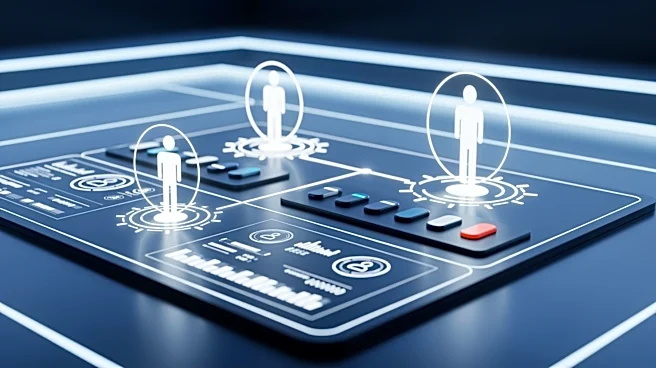
Vivi Mengjie Xiao, an AI product manager in China, has developed six AI employees using OpenClaw to manage various aspects of her work and personal life. These AI agents are divided into work-related roles, such as administrative assistant and researcher,
and personal roles, including life coach and finance assistant. Despite the increased efficiency, Xiao reports working longer hours, as the AI employees have shifted her focus from routine tasks to more creative and strategic work. The AI agents handle a significant portion of her daily operational tasks, allowing her to produce more content and manage her responsibilities effectively.
Why It's Important?
The integration of AI employees represents a significant shift in the future of work, where individuals can leverage technology to enhance productivity and creativity. This development highlights the potential for AI to transform traditional work structures, enabling solo creators and operators to achieve team-level output. The focus is shifting from execution ability to skills such as judgment, emotional intelligence, and the ability to direct AI. This evolution in work dynamics could lead to a reevaluation of workforce needs, prioritizing senior thinkers with AI support over larger teams of junior analysts.