


What's Happening?
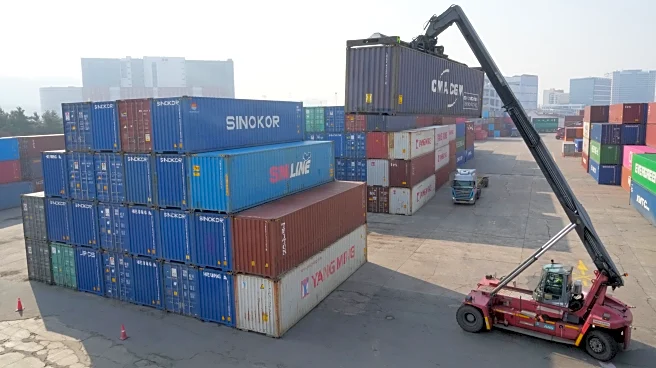
The U.S. dairy industry experienced a significant surge in exports in 2025, reaching near-record highs. Exports accounted for approximately 17% of total U.S. milk production, underscoring the growing importance of international markets for American dairy producers.
Despite ongoing trade tensions and tariff uncertainties, the industry maintained robust sales abroad. Competitive pricing, particularly lower cheese and butter prices compared to major global suppliers, enabled the United States to capture market share from rivals such as the European Union and New Zealand. Cheese exports were a major driver of this expansion, reaching a record 1.35 billion pounds, a 20% increase from the previous year. Monthly shipments exceeded 110 million pounds in eight of the twelve months, marking a milestone never previously achieved in a single month before that year.
Why It's Important?
The surge in U.S. dairy exports in 2025 highlights the sector's resilience and adaptability in the face of global trade challenges. By expanding its international market presence, the U.S. dairy industry has been able to mitigate domestic supply pressures and stabilize prices, particularly on the Chicago Mercantile Exchange. This growth is crucial for maintaining the economic viability of American dairy producers, who face fluctuating domestic demand and price volatility. Mexico emerged as the dominant buyer, accounting for 27% of total U.S. dairy export value, equivalent to about $2.6 billion. The diversification of sales across global markets has broadened the export portfolio, reducing dependency on any single market and enhancing the industry's ability to withstand geopolitical and economic shifts.
What's Next?
Looking ahead, the U.S. dairy industry may continue to focus on expanding its international footprint, leveraging competitive pricing and quality to capture additional market share. As global demand for dairy products grows, U.S. producers might explore new markets and strengthen existing trade relationships. However, ongoing trade negotiations and potential tariff changes could impact future export strategies. Industry stakeholders will likely monitor these developments closely to adapt their approaches and ensure continued growth in international sales.