







What's Happening?
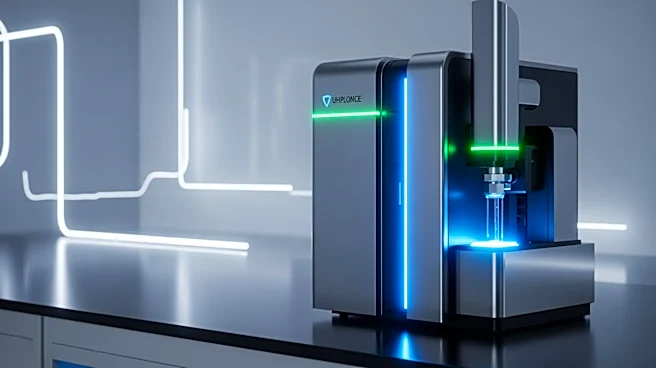
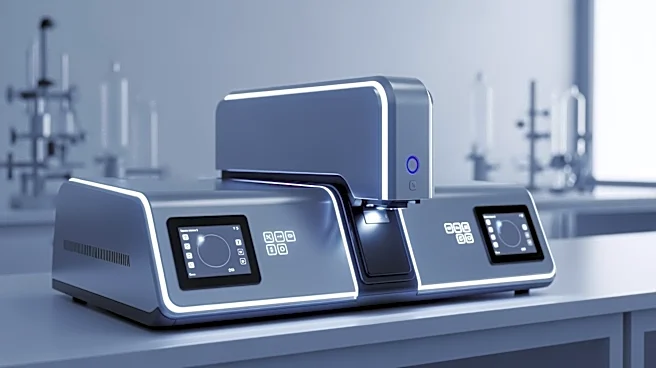
Agilent Technologies Inc. has announced the release of its new Agilent 9500 Triple Quadrupole ICP-MS, a cutting-edge inductively coupled plasma mass spectrometry system. This system is designed to assist laboratories in transitioning from single quadrupole
to triple quadrupole technology, thereby improving trace elemental analysis. The 9500 ICP-MS aims to address the increasing complexity of testing demands and the shortage of skilled resources by offering faster, interference-free results without adding operational burdens. Key innovations include the Air Cell and Advanced Helium Mode, which are part of Agilent's Dual-Cell System, and the intelligent OpenLab ICP-MS software. These features are intended to streamline workflows, reduce rework, and facilitate the adoption of advanced ICP-MS technology.
Why It's Important?
The introduction of the Agilent 9500 ICP-MS is significant for various industries, including environmental, food, pharmaceutical, and chemical laboratories. By reducing acquisition time by over 33%, the system enhances sample throughput and lowers the cost per sample analysis. This efficiency is crucial for laboratories facing increased workloads and cost constraints. The system's advanced interference removal capabilities, which minimize reliance on oxygen cylinders, also support more sustainable laboratory operations. As laboratories strive to meet complex analytical demands, the 9500 ICP-MS offers a practical solution that combines high data quality with reduced operational complexity.
What's Next?
The launch of the Agilent 9500 ICP-MS reflects a broader trend in the analytical instrumentation market towards more advanced and user-friendly technologies. Laboratories adopting this system can expect to see improvements in productivity and data quality, enabling them to tackle more demanding applications. As the system becomes integrated into routine testing environments, it may set a new standard for trace elemental analysis, prompting other companies to innovate similarly. The success of this system could lead to further advancements in laboratory technologies, driving efficiency and sustainability across the industry.