





What's Happening?
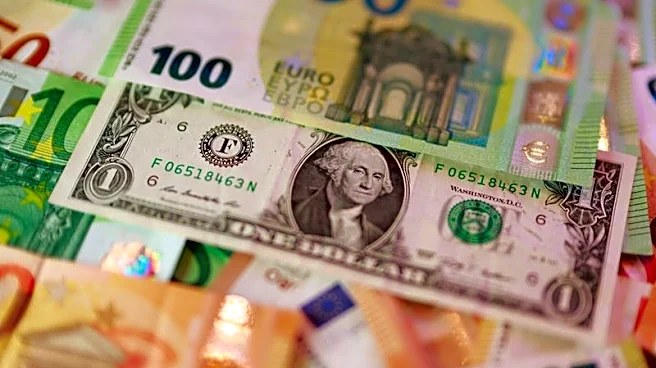
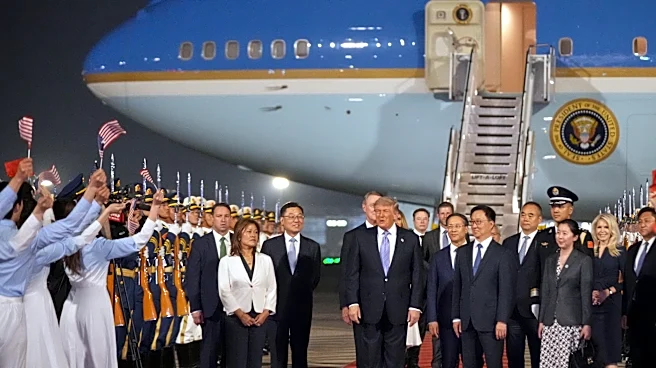
The U.S. dollar has strengthened for the fourth consecutive day, driven by rising U.S. Treasury yields and increasing expectations of Federal Reserve rate hikes. This development coincides with a two-day summit between U.S. President Donald Trump and China's
President Xi Jinping, where trade talks are reportedly making progress. However, tensions over Taiwan remain a potential flashpoint. The dollar's rise is also supported by recent U.S. inflation data, which showed significant increases in both producer and consumer prices. The Federal Open Market Committee (FOMC) is now expected to begin a tightening cycle in December, with markets pricing in a 35% chance of a rate hike, up from 16% a week ago. This has led to long-dated U.S. Treasury yields reaching their highest levels since mid-2025.
Why It's Important?
The strengthening of the U.S. dollar and the potential for Federal Reserve rate hikes have significant implications for global financial markets and the U.S. economy. A stronger dollar can impact U.S. exports by making them more expensive for foreign buyers, potentially affecting trade balances. Additionally, higher interest rates could slow economic growth by increasing borrowing costs for consumers and businesses. The ongoing Trump-Xi summit adds a layer of geopolitical complexity, as any developments in U.S.-China relations could influence global trade dynamics. The focus on inflation and monetary policy highlights the challenges faced by the Federal Reserve in balancing economic growth with price stability.
What's Next?
As the Trump-Xi summit continues, any announcements or agreements could have immediate effects on currency markets and trade policies. The Federal Reserve's next steps will be closely watched, particularly any signals regarding the timing and magnitude of rate hikes. Market participants will also monitor upcoming economic data releases for further indications of inflationary pressures. The potential for geopolitical tensions, especially concerning Taiwan, could also influence market sentiment and policy decisions.