



What's Happening?
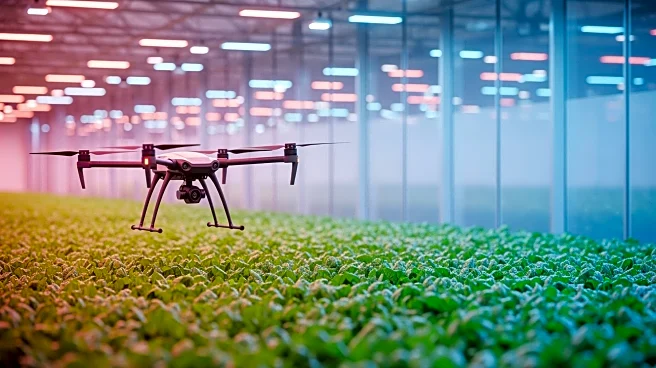
The Global Smart Agriculture Market is anticipated to grow significantly, reaching a valuation of USD 42.85 billion by 2032, according to a report by Verified Market Research. This growth is expected to occur at a compound annual growth rate (CAGR) of 10.30% from 2026 to 2032. The market, valued at USD 17.74 billion in 2024, is being driven by the increasing need for sustainable farming solutions. Technologies such as IoT and AI are enhancing resource efficiency and boosting agricultural yields while minimizing water and pesticide usage. The report highlights the role of advanced IoT sensors, automated machinery, and AI-driven crop management systems in transforming traditional farming practices.
Why It's Important?
The expansion of the Smart Agriculture Market
is crucial for addressing global challenges related to food security, resource optimization, and sustainability. As the global population is projected to exceed 9 billion by 2050, the demand for food security is becoming increasingly urgent. Smart agriculture technologies offer solutions that improve productivity and provide predictive insights, which are essential for meeting this demand. The market's growth presents significant opportunities for agribusiness leaders, technology providers, and investors who are looking to capitalize on the benefits of precision farming and sustainable practices.
What's Next?
The Smart Agriculture Market is expected to face challenges such as high initial costs of implementation and limited awareness in developing regions. Overcoming these obstacles will require manufacturers and solution providers to offer economical solutions and adaptable financing options. Additionally, efforts to increase awareness and technical proficiency in underdeveloped regions will be necessary to facilitate the adoption of smart farming technologies. Addressing data privacy and security concerns will also be critical as the market expands.
Beyond the Headlines
The dominance of North America in the Smart Agriculture Market is driven by sophisticated technical integration and significant investments in precision agriculture. The United States, in particular, plays a pivotal role due to its robust infrastructure and governmental support for sustainable agriculture initiatives. This regional leadership is likely to influence global smart agriculture practices, promoting innovation and collaboration across the industry.