
What's Happening?
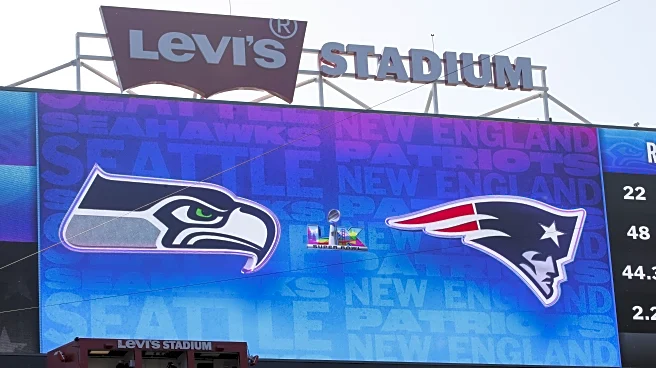
In Super Bowl 60, the New England Patriots faced off against the Seattle Seahawks, ultimately losing 29-13. Rhamondre Stevenson, a key player for the Patriots, managed to score a late touchdown despite
the team's overall struggles. Stevenson rushed seven times for 23 yards and caught five passes for 40 yards, including a seven-yard touchdown reception just before the two-minute warning. His performance was a highlight in a game where the Patriots struggled to maintain offensive momentum. Stevenson's role as a primary back was evident, although the team's inability to sustain drives limited his opportunities.
Why It's Important?
Stevenson's performance in the Super Bowl highlights his importance to the Patriots' offensive strategy. Despite the loss, his ability to contribute both in rushing and receiving underscores his versatility and value to the team. This game also reflects the challenges the Patriots face in maintaining offensive consistency, which could impact their strategy moving forward. Stevenson's role in the backfield, alongside TreVeyon Henderson, will be crucial as the team looks to improve its offensive output in future seasons. The game serves as a reminder of the competitive nature of the NFL and the need for teams to adapt and optimize their strategies.
What's Next?
Looking ahead, the Patriots will need to reassess their offensive strategies to better utilize their key players like Stevenson. The potential for Stevenson and Henderson to share backfield duties suggests a need for strategic adjustments to maximize their effectiveness. The team will likely focus on improving their drive sustainability and offensive execution in the upcoming season. As the Patriots prepare for the next NFL season, their ability to address these challenges will be critical to their success.