


What's Happening?
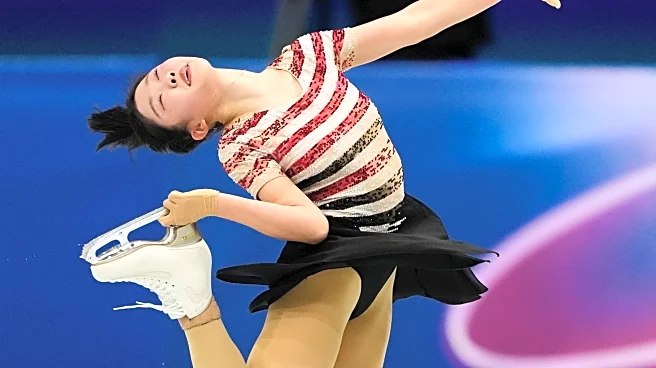
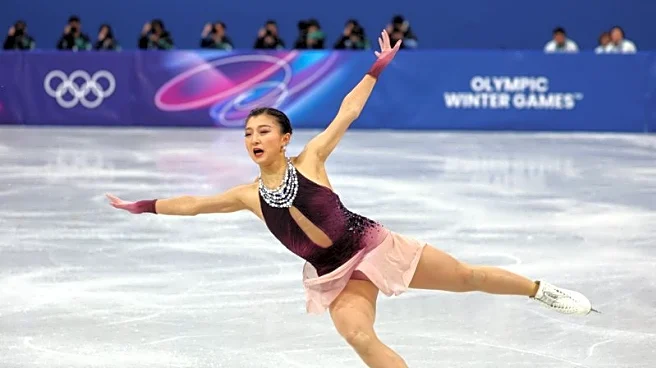
At the 2026 Milano Cortina Winter Games, Japan's Ami Nakai led the women's short program with a score of 78.71, followed by her teammate Kaori Sakamoto with 77.23. Mone Chiba, another Japanese skater, placed fourth with a score of 74.00. The top 24 competitors from the 29-woman field advanced to the free skate, scheduled for Thursday. Team USA's Alysa Liu, Amber Glenn, and Isabeau Levito also advanced. Liu, the reigning world champion, scored 76.59, placing third. Levito, the youngest at 18, scored 70.84, placing eighth, while Glenn scored 67.39, placing 13th after a strong start but faltering midway. The American skaters aim to secure the first individual women's figure skating gold for the U.S. in 24 years, having already won gold in the team event.
Why It's Important?
The performance of the Japanese skaters highlights their dominance in the sport, with three skaters in the top four positions. This underscores Japan's strong figure skating program and its potential to secure multiple medals. For Team USA, advancing all three skaters to the free skate is significant as they aim to end a 24-year drought in individual women's figure skating gold medals. The results also reflect the competitive nature of the sport, with young talents like Levito showcasing the depth of skill in the U.S. team. The outcomes of these events could influence future funding and support for figure skating programs in both countries.
What's Next?
The free skate event on Thursday will determine the final medal standings. Sakamoto, in her final Olympic appearance, will be seeking her first gold medal, adding emotional weight to her performance. Team USA's skaters will aim to capitalize on their strong positions to secure a podium finish. The results could impact the athletes' careers, with potential endorsements and increased visibility. The competition will also be closely watched by fans and analysts, as it may set the stage for future rivalries and highlight emerging talents in the sport.