







What's Happening?
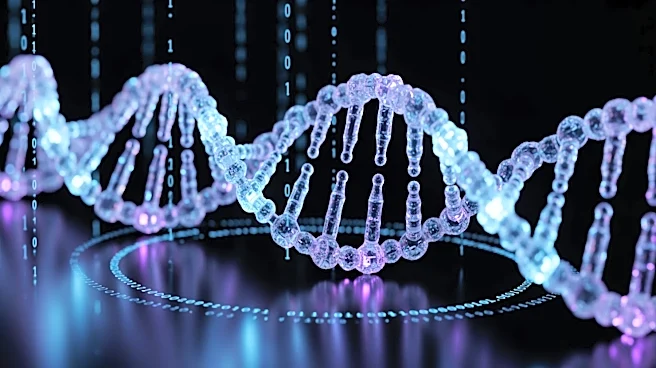
GenScript Biotech Corporation and Mimulus Corp have announced a strategic partnership to industrialize DNA-based data storage. This collaboration aims to address the growing demand for data storage solutions in the age of Artificial Intelligence. GenScript,
known for its CMOS-based DNA synthesis technologies, will focus on scaling high-throughput DNA synthesis, moving from millions to billions of oligonucleotides synthesized in parallel on a single chip. Mimulus Corp, a pioneer in Molecular Archive Technology, will contribute its proprietary architecture to create a sustainable archival infrastructure. The partnership seeks to replace traditional magnetic tape storage systems with molecular storage that requires no electricity for data preservation, offering a long-term solution to the global data storage crisis.
Why It's Important?
The collaboration between GenScript and Mimulus is significant as it addresses the limitations of current data storage technologies, which are struggling to keep up with the exponential growth of data driven by AI. By developing DNA-based storage solutions, the partnership aims to provide a more sustainable and efficient method of data preservation. This could have profound implications for industries reliant on large-scale data storage, such as cloud computing and AI. The ability to store massive volumes of data without electricity could reduce operational costs and environmental impact, making it a viable option for future data storage needs.
What's Next?
The partnership plans to accelerate the development of DNA-based storage solutions, with the goal of achieving commercial viability by 2030. As the technology progresses, it is expected to attract interest from major stakeholders in the tech and data storage industries. The collaboration could lead to further innovations in molecular data storage, potentially reshaping the landscape of data preservation and management. Stakeholders will likely monitor the progress closely, considering the potential for significant cost savings and environmental benefits.
Beyond the Headlines
The shift to DNA-based data storage could have broader implications beyond technological advancements. It may influence regulatory frameworks and standards for data storage, as well as ethical considerations regarding data privacy and security. The development of this technology could also spur new research and investment in synthetic biology and molecular engineering, driving innovation across multiple sectors.