







What's Happening?
In a groundbreaking achievement, Kenyan runner Sabastian Sawe completed the London Marathon in under two hours, clocking a time of 1:59:30. This marks a significant milestone in marathon history, as the sub-two-hour marathon was once considered an unattainable
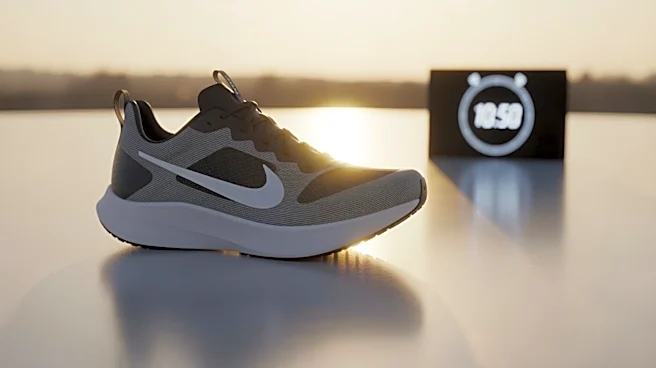
feat. Sawe's performance was closely followed by Ethiopian runner Yomif Kejelcha, who also finished under two hours, just 11 seconds behind. The race was characterized by strategic pacing and the use of advanced running shoes, which have been a topic of discussion in the running community. Adidas, Sawe's sponsor, introduced a new shoe design with an ultralight midsole foam, contributing to the runner's success. The event also highlighted the ongoing debate about the role of technology and doping in athletics, with Sawe undergoing extensive drug testing to ensure the integrity of his performance.
Why It's Important?
This achievement is significant as it challenges the perceived limits of human endurance and athletic performance. The breaking of the two-hour marathon barrier not only sets a new benchmark in the sport but also raises questions about the future of marathon running. The use of advanced shoe technology, which has been credited with enhancing performance, could lead to further innovations and changes in competitive running. Additionally, the rigorous drug testing undertaken by Sawe underscores the importance of maintaining fair play in sports, especially in light of past doping scandals. This event could influence future regulations and standards in marathon competitions, impacting athletes, sponsors, and the broader sports industry.
What's Next?
Following this historic achievement, there may be increased scrutiny on the role of technology in sports, particularly regarding footwear. Regulatory bodies might consider implementing new guidelines to ensure a level playing field. The success of Sawe and the attention on his performance could also inspire other athletes to push the boundaries of what is possible in marathon running. Additionally, sponsors and sports brands may intensify their efforts in research and development to create even more advanced athletic gear. The broader implications for the sport could include a reevaluation of training methods and strategies as athletes aim to replicate or surpass this milestone.
Beyond the Headlines
The breaking of the two-hour marathon barrier by Sabastian Sawe could have cultural and psychological impacts beyond the immediate sports community. It challenges long-held beliefs about human physical limits and could inspire a new generation of athletes to pursue seemingly impossible goals. This achievement also highlights the intersection of sports and technology, raising ethical questions about the extent to which technology should influence athletic performance. As the debate continues, the running community may need to address how to balance innovation with tradition, ensuring that the essence of the sport is preserved while embracing advancements.