







What's Happening?
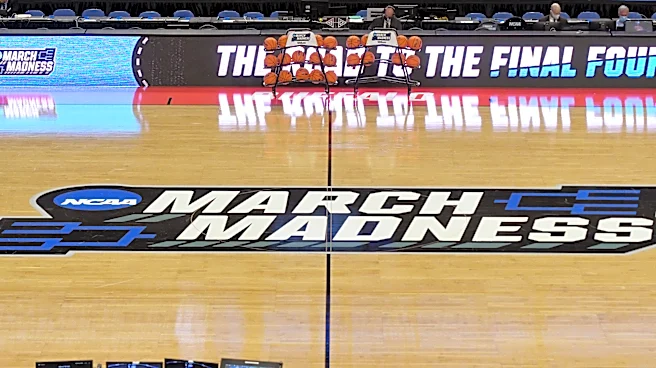
The NCAA is set to expand the March Madness tournament fields for both men's and women's basketball from 68 to 76 teams starting in 2027. This expansion plan is expected to be approved by NCAA committees and formalized by May. According to reports, the new
format will include 52 teams directly entering the main bracket, while 24 teams will compete in 12 games on the Tuesday and Wednesday following Selection Sunday. These games will determine the final slots for the Round of 64. The terminology for these initial games will change from 'First Four' to 'opening round,' with the subsequent games being referred to as the 'first round.' This marks the first expansion since 2011 when the tournament increased from 65 to 68 teams. The Big 12 and Atlantic Coast Conference have been significant proponents of this expansion, with NCAA President Charlie Baker expressing support for the move.
Why It's Important?
The expansion of the NCAA tournament is significant as it reflects a growing interest in college basketball and the potential for increased revenue through media contracts and sponsorships. By adding more teams, the NCAA aims to enhance the competitiveness and inclusivity of the tournament, potentially allowing more schools to participate and gain exposure. This change could lead to increased viewership and fan engagement, benefiting broadcasters and advertisers. Additionally, the expansion may provide more opportunities for student-athletes to showcase their talents on a national stage, potentially impacting their future careers in professional sports. However, it also raises questions about the logistical challenges of accommodating more teams and the potential dilution of the tournament's competitive quality.
What's Next?
The next steps involve finalizing contract negotiations with media partners, which is crucial before the expansion plan can be officially approved by various NCAA committees, including the men's and women's basketball committees and the Division I Board of Governors. Once these approvals are secured, the NCAA will need to address logistical considerations, such as scheduling, venue arrangements, and travel plans for the additional teams. Stakeholders, including universities, coaches, and players, will likely begin preparing for the expanded format, which may involve adjustments in team strategies and recruitment efforts. The NCAA will also need to communicate these changes effectively to fans and media to ensure a smooth transition to the new tournament structure.