

What's Happening?
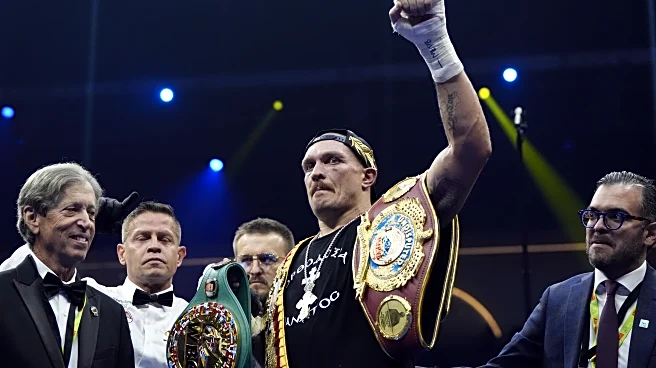
The World Boxing Council (WBC) has sanctioned a heavyweight title defense for Oleksandr Usyk against Rico Verhoeven, a prominent kickboxer with limited professional boxing experience. The fight is scheduled for May 23 in Egypt and will be streamed globally
on DAZN. Verhoeven, who has not competed in professional boxing since 2014, is known for his extensive achievements in kickboxing, where he held a heavyweight championship for over a decade. Despite his lack of recent boxing experience, the WBC has approved him as a challenger, a decision that deviates from the traditional path of ranked challengers and mandatory defenses. This move highlights a shift in how championship fights are being approved, focusing more on the event's global reach and commercial appeal rather than strict adherence to competitive boxing standards.
Why It's Important?
This decision by the WBC underscores a significant shift in the criteria for sanctioning heavyweight title fights, prioritizing commercial appeal and global reach over traditional competitive standards. By approving a challenger with minimal boxing experience, the WBC is setting a precedent that could influence future title defenses and the overall integrity of the sport. This move may attract a broader audience, including fans of kickboxing, but it also raises concerns about the dilution of competitive standards in boxing. Established boxers who have worked through the ranks may find this decision controversial, as it potentially undermines the merit-based system traditionally used to determine title challengers. The event's success could lead to more crossover fights, impacting the future landscape of professional boxing.
What's Next?
The upcoming fight between Usyk and Verhoeven will likely be closely watched by both boxing and kickboxing communities, as well as sports promoters. If successful, this event could pave the way for more crossover matches, where athletes from different combat sports compete for boxing titles. This could lead to a reevaluation of how title fights are sanctioned and potentially open the door for more non-traditional challengers. Stakeholders in the boxing industry, including promoters and sanctioning bodies, may need to consider the balance between commercial interests and maintaining the sport's competitive integrity. The outcome of this fight could influence future decisions regarding title defenses and the criteria for challenger eligibility.
Beyond the Headlines
The decision to sanction Verhoeven as a challenger highlights broader implications for the sport of boxing. It raises ethical questions about the balance between commercial interests and the sport's integrity. The move could lead to a shift in how boxing is perceived, potentially attracting a new audience but also risking alienation of traditional fans who value the sport's competitive structure. This development may also influence other combat sports, encouraging athletes to explore opportunities in boxing, thereby blurring the lines between different fighting disciplines. The long-term impact on boxing's reputation and its appeal to future generations of athletes and fans remains to be seen.