


What's Happening?
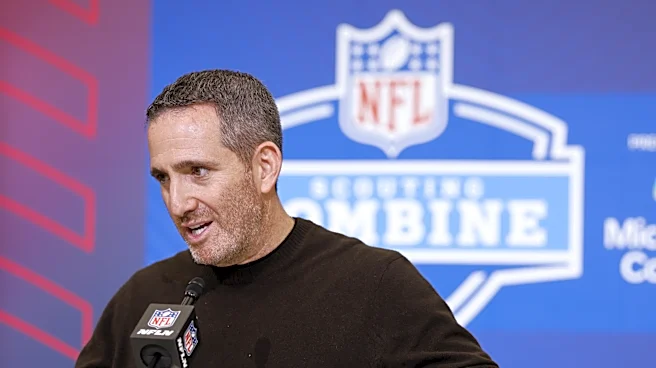
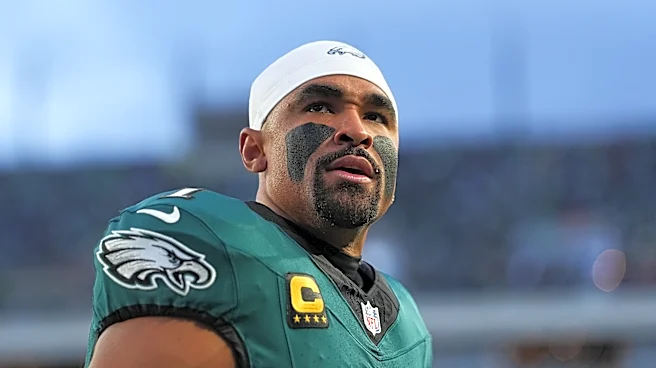
A recent ESPN report has brought to light internal issues within the Philadelphia Eagles organization, particularly concerning quarterback Jalen Hurts. The report, released shortly after the NFL league meetings in Arizona, suggests that the Eagles are
frustrated with Hurts' handling of the offense. It highlights Hurts' tendency to ignore called plays, a situation exacerbated by his contract, which makes it financially challenging for the team to trade or release him. The report implies that the Eagles may be preparing to take a firmer stance with Hurts, especially with the arrival of new offensive coordinator Sean Mannion, who is expected to implement changes that Hurts might resist. The timing of the report suggests it could be a strategic move by the Eagles to signal potential changes in their approach to managing Hurts.
Why It's Important?
The revelations about the Eagles' internal dynamics are significant as they could impact the team's future performance and strategy. Jalen Hurts is a key player for the Eagles, and any discord between him and the management could affect team morale and on-field performance. The report indicates a potential shift in the Eagles' approach, which could lead to changes in their offensive strategy. This situation also highlights the broader issue of player power in the NFL, where lucrative contracts can limit a team's flexibility in managing their roster. The outcome of this situation could set a precedent for how teams handle similar issues with star players in the future.
What's Next?
The Eagles may need to address the concerns raised in the report to prevent further disruption. This could involve renegotiating Hurts' role or contract terms to align with the team's strategic goals. The team's management and coaching staff will likely need to engage in discussions with Hurts to find a mutually agreeable path forward. Additionally, the performance of the team in the upcoming season will be closely watched to see if the reported issues have been resolved or if they continue to affect the team's dynamics.