

What's Happening?
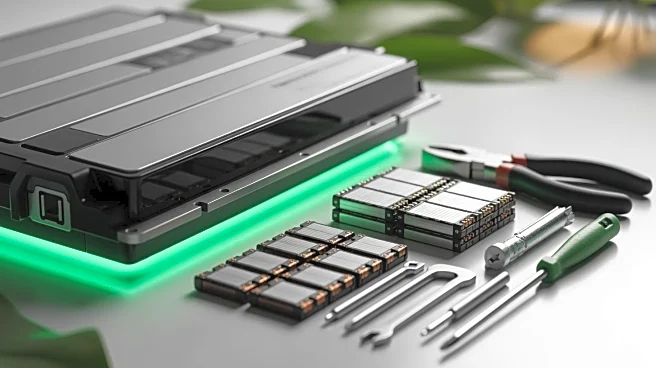
The increasing adoption of electric vehicles (EVs) has led to a growing demand for lithium-ion batteries (LiBs), presenting both challenges and opportunities for waste management and green energy transition. End-of-life EV LiBs, retaining up to 80% capacity,
can be repurposed for alternative applications, recycled to recover valuable materials, or regenerated to restore performance. This approach supports the transition to clean energy and Net Zero targets. Research is focused on overcoming technical challenges such as capacity estimation, fault diagnosis, and efficient material recovery.
Why It's Important?
The ability to effectively recycle and repurpose EV batteries is crucial for sustainable energy practices and reducing environmental impact. By recovering critical materials like lithium, nickel, and cobalt, the industry can reduce dependency on raw material extraction and minimize waste. This initiative aligns with global efforts to achieve Net Zero emissions and supports the circular economy model. Advancements in battery recycling technology can also drive innovation in battery design, making future batteries more sustainable and easier to recycle.
What's Next?
Continued research and development in battery recycling and repurposing are expected to yield new technologies and processes that enhance efficiency and sustainability. Policymakers and industry leaders may collaborate to establish standards and regulations that promote recycling practices and support infrastructure development. As the EV market grows, the demand for sustainable battery solutions will likely increase, driving further investment and innovation in this field.