





What's Happening?
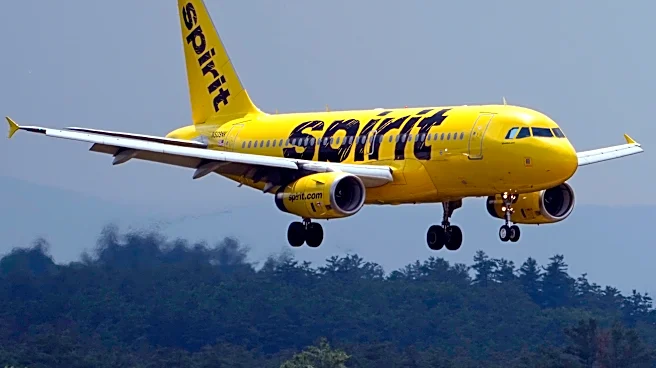
The Biden administration's Department of Justice (DOJ), led by then Attorney General Merrick Garland, opposed a merger between JetBlue and Spirit Airlines, citing potential negative impacts on consumer fares and choices. This decision has come under scrutiny
following the recent shutdown of Spirit Airlines, which employed approximately 17,000 people. Neera Tanden, a former senior advisor to President Joe Biden, questioned whether the DOJ's decision was the right call, given the subsequent job losses. The merger was initially blocked due to concerns that it would lead to higher fares and fewer choices for travelers. The situation has sparked debate among political figures, with some attributing Spirit's downfall to external factors such as high fuel prices exacerbated by geopolitical tensions.
Why It's Important?
The shutdown of Spirit Airlines highlights the complex interplay between regulatory decisions and market dynamics in the airline industry. The DOJ's stance against the merger was intended to protect consumers from potential monopolistic practices, but it also raises questions about the balance between antitrust enforcement and the economic viability of companies. The closure of Spirit Airlines not only affects thousands of employees but also reduces competition in the airline market, potentially leading to higher prices and fewer options for consumers. This case underscores the challenges regulators face in making decisions that balance consumer protection with industry sustainability.
What's Next?
The fallout from Spirit Airlines' closure may prompt further discussions on antitrust policies and their implications for the airline industry. Stakeholders, including policymakers and industry leaders, may need to reassess strategies to support struggling airlines while ensuring competitive markets. The situation could lead to calls for revisiting antitrust laws or exploring alternative measures to support the airline industry in times of financial distress. Additionally, the impact on employees and consumers may drive advocacy for policies that better address the needs of affected workers and travelers.