



What's Happening?
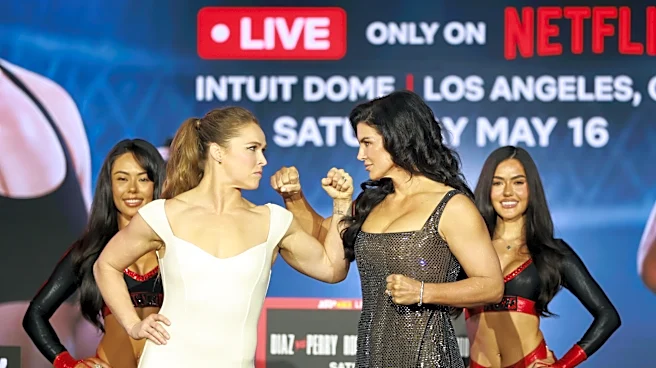
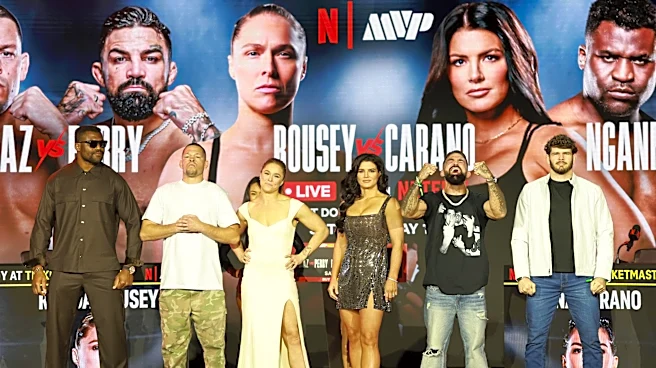
Ronda Rousey, the former UFC women's bantamweight champion, has publicly criticized UFC executive Hunter Campbell, labeling him a 'chauvinist' for his dismissive attitude towards her return to mixed martial arts (MMA). Rousey is set to make her comeback
in a fight against Gina Carano, which will be the first MMA event streamed on Netflix, organized by Jake Paul's Most Valuable Promotions. Rousey expressed her dissatisfaction with Campbell, who reportedly opposed her return to the UFC, despite support from UFC President Dana White. Campbell allegedly viewed Rousey's return as an opportunity to eliminate the women's featherweight division, a move Rousey found disrespectful. She accused Campbell of attempting to devalue her and Carano, and expressed her ambition to become a leading figure in the sport, potentially replacing Campbell.
Why It's Important?
Rousey's return to MMA and her criticism of Campbell highlight ongoing issues of gender equality and respect within the sport. Her accusations against Campbell bring attention to the challenges female fighters face in gaining recognition and respect in a male-dominated industry. The event's success on Netflix could set a precedent for future MMA broadcasts on streaming platforms, potentially altering the landscape of sports media. Rousey's ambition to take on a leadership role in MMA could inspire other female athletes to pursue similar paths, challenging existing power structures within the sport. The situation underscores the importance of addressing gender biases and ensuring equitable treatment for all athletes.
What's Next?
Rousey's upcoming fight against Carano will be a significant test of her ability to draw audiences and prove her relevance in the sport after a long hiatus. The event's performance on Netflix could influence future MMA promotions and the role of streaming services in sports broadcasting. If successful, Rousey may gain leverage in her quest to assume a more prominent role in MMA leadership. The UFC and its executives may face increased scrutiny regarding their treatment of female fighters and the management of women's divisions. Stakeholders in the sport, including promoters and athletes, will likely monitor the event's outcome and its implications for the future of MMA.