






What's Happening?
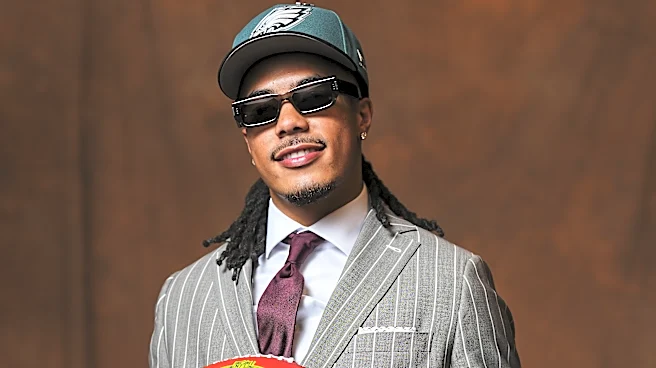
During the first round of the NFL draft, a mix-up occurred involving the Philadelphia Eagles and the Pittsburgh Steelers over USC wide receiver Makai Lemon. The Steelers were on the phone with Lemon, intending to select him at No. 21, while the Eagles,
picking at No. 20, also aimed to draft him. This led to a brief period of confusion as the Eagles struggled to contact Lemon, who was engaged with Pittsburgh. Eventually, the Eagles managed to reach Lemon and selected him at No. 20. Howie Roseman, the Eagles' general manager, recounted the incident on the Rich Eisen Show, describing the stress of the situation and his determination to secure Lemon for the team. Roseman emphasized the importance of speaking directly with a player before making a draft pick to ensure everything is in order.
Why It's Important?
This incident highlights the high-stakes nature of the NFL draft, where communication and timing are crucial. For the Eagles, securing Makai Lemon was a significant move, as he was a top-ranked wide receiver and a key target for their roster. The situation underscores the competitive environment of the draft, where teams must navigate complex logistics to secure their desired players. The Eagles' ability to successfully draft Lemon despite the confusion demonstrates their strategic acumen and adaptability. This event also illustrates the broader challenges teams face in ensuring smooth operations during high-pressure situations, which can have lasting impacts on team composition and performance.
What's Next?
Following the draft, the Eagles will integrate Makai Lemon into their team, focusing on his development and role within their offensive strategy. As a highly ranked wide receiver, Lemon is expected to contribute significantly to the Eagles' performance in the upcoming season. The team will likely work on building chemistry between Lemon and the existing roster, particularly with the quarterback, to maximize his impact on the field. Additionally, the Eagles' management may review their draft day procedures to prevent similar communication issues in the future, ensuring more seamless operations in subsequent drafts.