



What's Happening?
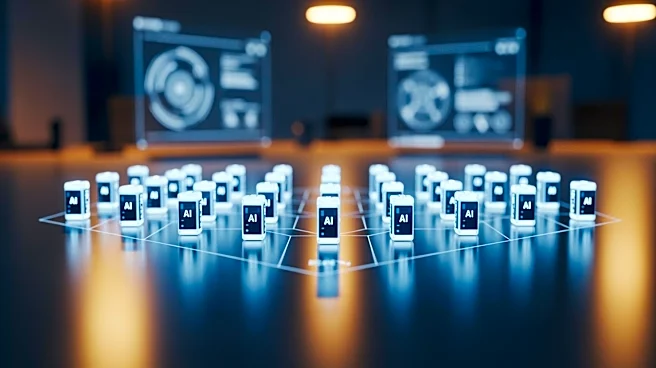
Andy Cabasso, a growth operations manager at ClickUp, manages 37 AI agents that assist with various tasks such as scheduling, analytics, and meeting follow-ups. These AI agents are personalized with fictional personalities to enhance engagement and task execution.
Cabasso's role has evolved from traditional management to orchestrating AI agents, allowing him to focus more on strategy and less on administrative tasks. This shift highlights the growing integration of AI in workplace operations, where nontechnical managers can leverage AI tools to improve efficiency and productivity.
Why It's Important?
The use of AI agents in the workplace signifies a transformative change in how businesses operate. By automating routine tasks, companies can increase efficiency and allow employees to focus on higher-level strategic work. This development also demonstrates the potential for AI to democratize access to advanced technology, enabling nontechnical individuals to manage complex systems. However, it raises questions about the future of work, job displacement, and the need for new skills in managing AI-driven processes.
What's Next?
As AI technology continues to advance, more companies may adopt similar approaches, integrating AI agents into their operations. This could lead to a reevaluation of job roles and responsibilities, with a greater emphasis on managing and optimizing AI systems. Organizations will need to invest in training and development to equip employees with the skills necessary to work alongside AI. Additionally, ethical considerations around AI decision-making and data privacy will become increasingly important as these technologies become more prevalent.