


What's Happening?
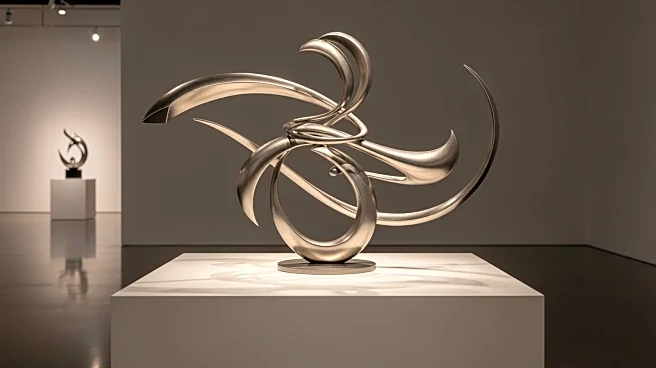
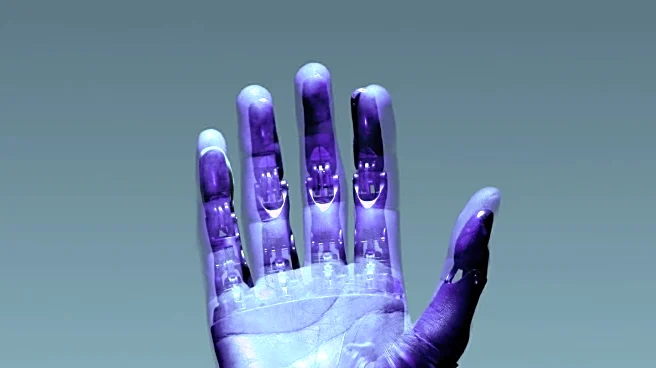
Berenice Olmedo, a Mexican sculptor, is gaining attention for her innovative work that combines art with themes of disability and biopolitics. Her latest piece, Pnoê, was showcased at the Bienal de São Paulo and is inspired by vintage breathing aids. Olmedo uses medical equipment, such as orthoses and prostheses, as both motifs and symbols of technology, challenging traditional views of these devices as mere medical aids. Her work often features kinetic sculptures that incorporate found medical devices, imbuing them with personality and exploring the concept of the human body as a machine. Olmedo's art reflects on the fragility of the human body, a theme underscored by the COVID-19 pandemic, and suggests that technology can be a means of reconstructing
human identity.
Why It's Important?
Olmedo's work is significant as it challenges societal perceptions of disability and the human body. By integrating medical devices into her sculptures, she questions the hierarchy between natural and artificial body parts, promoting a view of technology as an extension of human capability. This perspective is particularly relevant in discussions about transhumanism and the future of human evolution. Her art also highlights issues of accessibility and the socio-economic factors that affect health, as seen in her exploration of secondhand disability aids in Mexico. Olmedo's work encourages a broader conversation about the role of technology in society and its potential to redefine human limitations.
What's Next?
Olmedo's work is likely to continue influencing discussions on transhumanism and the integration of technology in human life. As she explores new projects, her art may inspire further dialogue on the ethical implications of biotechnological advancements. Her focus on accessibility and the socio-economic dimensions of health could also prompt policy discussions on healthcare equity. Additionally, her exhibitions may attract more attention from international art communities, potentially leading to collaborations that further explore the intersection of art, technology, and human identity.
Beyond the Headlines
Olmedo's art raises deeper questions about the nature of humanity and the potential for technology to alter human existence. Her work suggests a future where the boundaries between human and machine are blurred, challenging traditional notions of identity and autonomy. This exploration of transhumanism also touches on ethical considerations, such as who controls technological advancements and who benefits from them. Olmedo's sculptures, with their DIY aesthetic, propose a vision of the future that is accessible and inclusive, emphasizing the importance of democratizing technology.