


What's Happening?
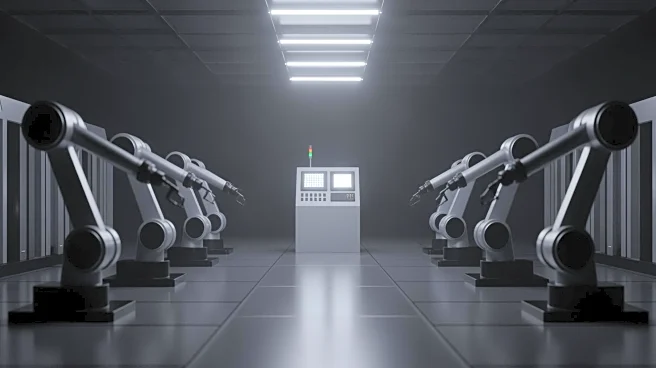
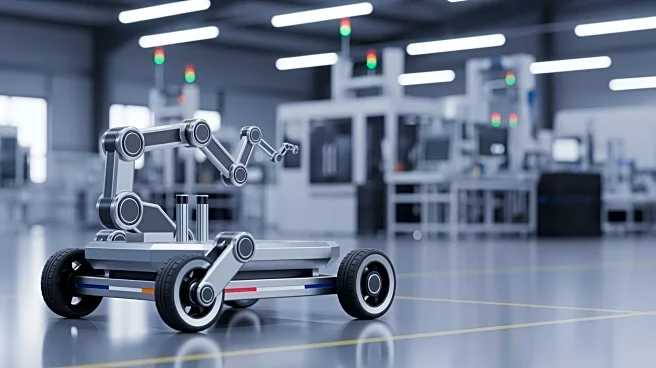
The industrial robotics sector is undergoing a significant transformation as AI becomes the central component of robotic systems, shifting the focus from mechanical capabilities to intelligent software. By 2026, AI is expected to be the 'brain' of industrial robots,
enabling them to perceive, learn, and adapt to dynamic environments. This shift allows robots to perform tasks with greater flexibility and efficiency, reducing deployment times and enhancing productivity. The integration of AI into robotics is leading to a structural transition from machine-centric to intelligence-centric automation, where the software layer determines the robot's productivity, scalability, and adaptability. This development is crucial as it allows for continuous performance improvement and operational resilience, particularly in industries facing supply-chain disruptions and personalized manufacturing demands.
Why It's Important?
The rise of AI in industrial robotics is reshaping the manufacturing landscape by providing businesses with new operational methods that enhance productivity and return on investment. AI-driven robots can adapt to changes and optimize performance using data, transforming fixed automation into flexible systems. This flexibility is critical for industries with high-mix, low-volume production and labor volatility. The shift towards AI-centric robotics also alters workforce dynamics, as engineers focus more on training behaviors and managing data rather than programming motion paths. This evolution in robotics not only improves operational efficiency but also positions companies to better handle variability and unstructured workflows, ultimately strengthening organizational resilience and competitiveness.
What's Next?
As AI continues to integrate into industrial robotics, the focus will likely shift towards platform ownership and the development of robot-agnostic foundation models. Companies that succeed in creating a universal 'brain' for robots could dominate the market, similar to how operating systems captured value in the smartphone industry. This trend introduces new dependencies for manufacturers, as the choice of intelligence layer could impact upgrade cycles and long-term costs. Robotics firms will need to co-design hardware and AI systems to avoid becoming low-margin hardware suppliers. The future of industrial robotics will likely see a convergence of hardware and intelligence, with the most competitive factories being those that effectively integrate smart robots and intermediary systems.
Beyond the Headlines
The integration of AI into industrial robotics raises important ethical and economic considerations. While AI-driven robots enhance productivity, they also shift the nature of work, potentially leading to job displacement in certain roles. However, they also create opportunities for new roles focused on supervision, training, and data-driven decision-making. The transition to AI-centric robotics may also influence global manufacturing strategies, as companies seek to leverage intelligent systems to maintain a competitive edge. Additionally, the emphasis on software over hardware could lead to increased collaboration between technology providers and manufacturers, fostering innovation and driving the development of more advanced robotic systems.